Pecan Trees for Sale Online
Type 2 Pecan Trees

Type 1 Pecan Trees
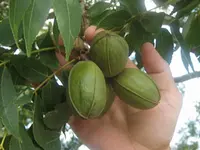

Northern Pecans
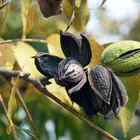
More Information
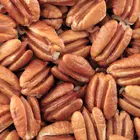
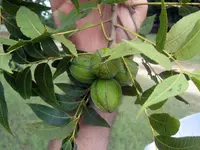
When planting pecan trees, they need to be spaced 40 to 60 feet apart in orchard plantings and no closer than 40 feet for home plantings. However, pollination may occur between trees over 200 feet apart. To ensure production of nuts, you must plant two varieties. Some self-pollination may occur, however it is highly recommended to plant at least three varieties together for maximum pollination and production. We classify the pollination periods of each tree as either protandrous (Type 1) or protogynous (Type 2.) You should mix Type 1 and Type 2 for best pollination and highest yields.
Our grafted pecan trees for sale will grow in a variety of soil types, except poorly drained soils. When planting pecan trees, dig a hole that is, at least, two feet wide and three feet deep and back fill with well drained soil. Also, do not apply fertilizers for the first two years. After that time, in the Spring apply one pound of 10-10-10 with micronutrients around the root zone of the tree. Then, you should apply one pound of zinc sulphate and another pound of fertilizer in July. Zinc is especially important for pecan trees so you will need to continue to apply one pound of zinc sulfate each year. You should also increase your fertilizer by one pound each year. We sell our trees bare-root and recommend pruning 1/3 to 1/2 of the top of your new tree to encourage vigorous growth and rapid establishment. Willis Orchard Company will assist you with making your pecan tree selections and offer expert advice for all of your pecan tree needs.