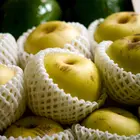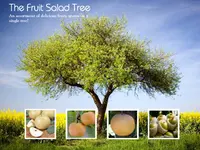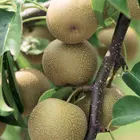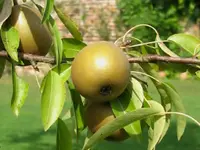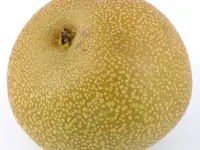
Pyrus pyrifolia, or Asian pears, are a large group of pears that have a crisp texture when fully ripened, unlike European pears that must be softened prior to eating. They are often referred to as a salad pear due to their firm texture. Asian pears are self fertile but produce a better crop when two or more varieties are planted together. Cooler summers will delay the ripening process but a warmer one will hasten it. They are a great source of vitamin B and C. One large Asian pear also contains about 30% of your daily fiber intake and helps to promote healthy cholesterol. Explore our selection of Asian pear trees for sale.
Asian Pears originate from Korea and have become extremely popular in the United States. They are round, sweet and crisp. Some say they eat like an apple but taste like a pear. However, they are actually much juicier than an apple and have a distinctive unique pear flavor. Willis Orchard Company has the three most fire blight resistant Asian Pear tree varieties for sale to ensure the success of your home orchard. Asian pears are great eaten right off the Korean pear tree or can be stored for months.
Enter your 5-digit ZIP code to find your Plant Hardiness Zone.
or
Already know your zone? Choose it here:
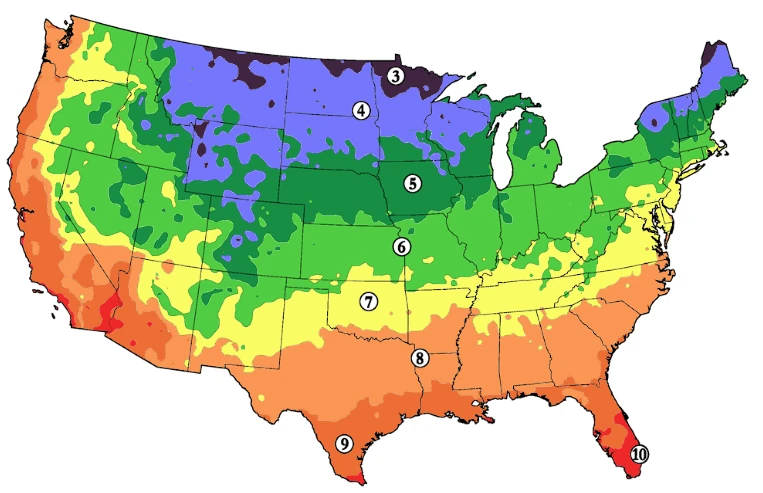
What is a Hardiness Zone?
A hardiness zone is a geographic area defined by average annual minimum winter temperatures, helping gardeners determine which plants can survive in their region. Developed by the USDA, the 13 numerical zones indicate cold hardiness—for example, a plant "hardy to zone 10" tolerates minimum temperatures of 30 to 40 °F (−1.1 to 4.4 °C).