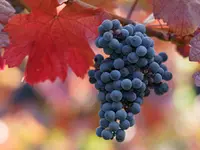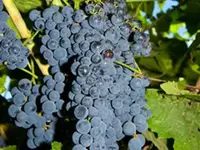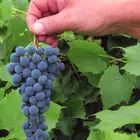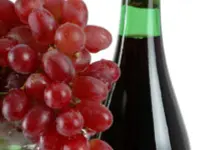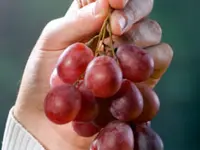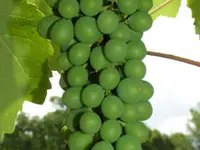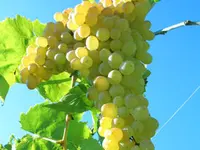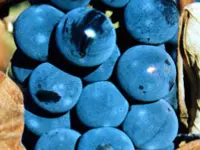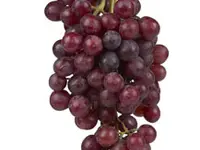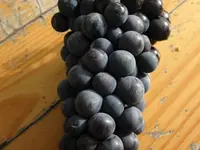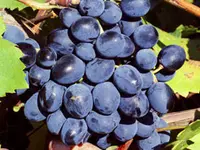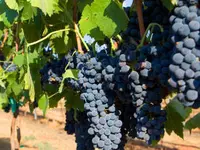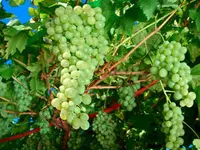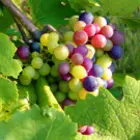
Grapes were first introduced to the United States by Spanish explorers in the 1700s. Grapes are a berry and have typically a thin skin that yields to a fleshy interior. There are over 8000 different varieties spread across 60 different species of grapes and are one of the world's top 10 favorite fruits. The primary types are American and European grapes. Among the most popular types grown today are bunch and seedless grape varieties, which are favored for fresh eating and home gardening. The fruits are round and come in green, red, pink, purple, yellow, and black. The United States currently imports around 25% of grapes used from Chile. Grapes have a variety of uses, from juice and wines to jams and jellies. Explore our wide selection of bunch and seedless grapes for sale.
Bunch grapes are the classical type of grapes used since the beginning of recorded history. Bunch grapes grow in large pods that average 100 berries per bunch. They are used for jelly, jams, preserves, wine, juice, and fresh eating. Seedless grapes are the same, with the exception of no seeds. Seedless grapes are primarily used for fresh eating. There are thousands of varieties of grape vines for sale, and Willis Orchard Company has selected a few of the best varieties for your home vineyard.
Enter your 5-digit ZIP code to find your Plant Hardiness Zone.
or
Already know your zone? Choose it here:
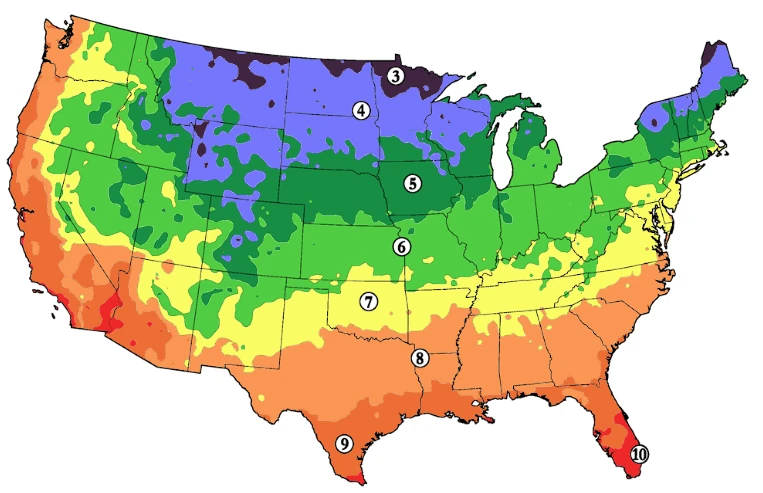
What is a Hardiness Zone?
A hardiness zone is a geographic area defined by average annual minimum winter temperatures, helping gardeners determine which plants can survive in their region. Developed by the USDA, the 13 numerical zones indicate cold hardiness—for example, a plant "hardy to zone 10" tolerates minimum temperatures of 30 to 40 °F (−1.1 to 4.4 °C).