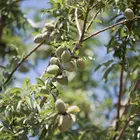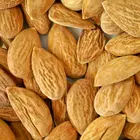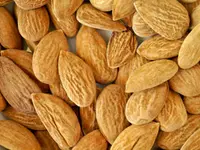
Almond Trees are nut trees that originated in Western Asia and Northern Africa. They belong to the same tree family as the cherry, plum, peach, and apricot. The almond tree looks similar to a peach or apricot. However, instead of a sweet flesh and sour kernel, the almond tree has a sour flesh and a sweet kernel. Though they are in the same family as these other fruits, an almond is actually considered a nut tree. There are many amazing almond tree varieties to choose from for both home gardens and orchards.
Each almond nut variety is not only very delicious, but they are very healthy for you, as well. It is high in protein and contains high levels of antioxidant flavonoids. The oil extracted from almonds is used as flavoring in cooking and used for medicinal purposes. There are many dwarf almond tree varieties that produce nuts of varying quality and grow well with flowering tree varieties. These qualities make almond trees a popular choice for gardeners looking to buy almond trees for nut production or ornamental use. Willis Orchard Company offers for sale only the sweet-producing almond tree varieties used in culinary delights, such as the famous marzipan pastry or ground nuts in cookies and chocolates. Explore our selection of almond trees for sale.
Enter your 5-digit ZIP code to find your Plant Hardiness Zone.
or
Already know your zone? Choose it here:
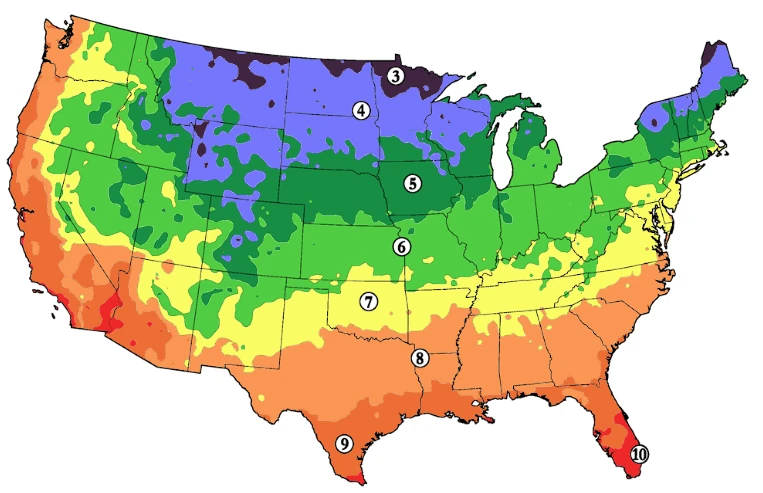
What is a Hardiness Zone?
A hardiness zone is a geographic area defined by average annual minimum winter temperatures, helping gardeners determine which plants can survive in their region. Developed by the USDA, the 13 numerical zones indicate cold hardiness—for example, a plant "hardy to zone 10" tolerates minimum temperatures of 30 to 40 °F (−1.1 to 4.4 °C).