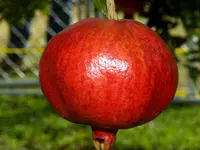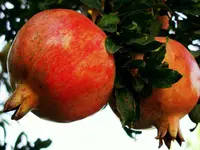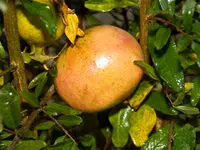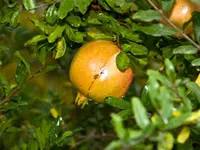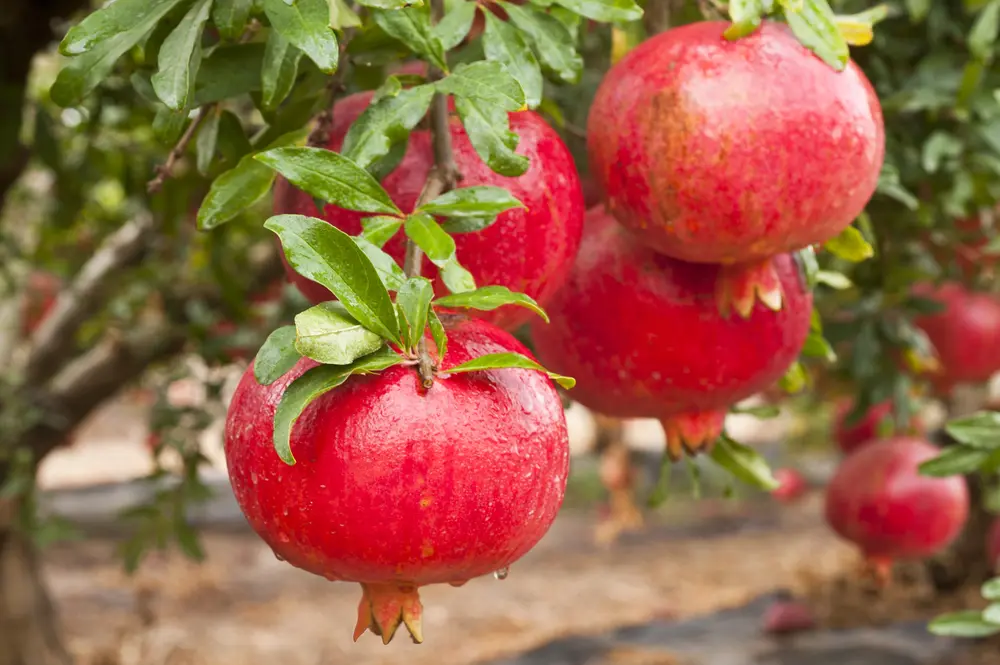
Pomegranate trees bring plenty of character to the landscape, producing vibrant flowers, glossy foliage, and flavorful fruit packed with ruby-red arils. These long-lived fruit trees are relatively easy to maintain once established.
Whether you're adding one tree to a backyard garden or expanding a home orchard, understanding how to grow a pomegranate tree starts with the right variety, planting location, and care routine. Explore our selection of pomegranate trees to find a variety suited to your growing conditions.
Choose the Right Pomegranate Tree
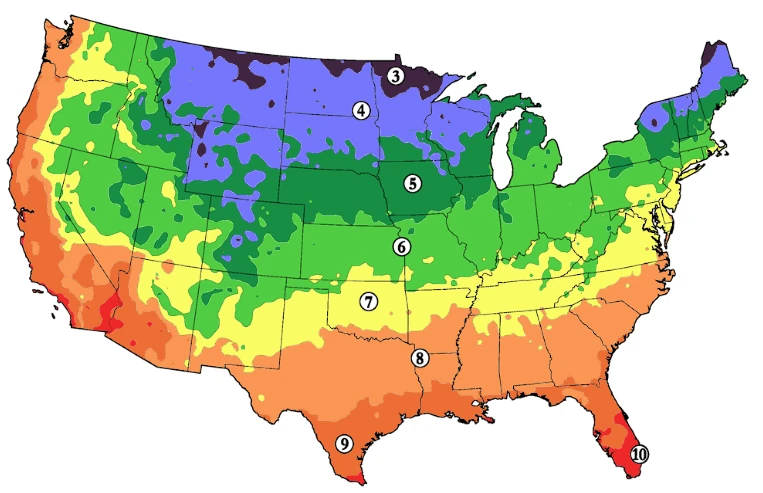
Pomegranate trees perform especially well in warm climates with long, hot summers. Many varieties are suited to USDA Zones 7–10, while cold-hardy selections such as Salvatski can grow into Zone 6.
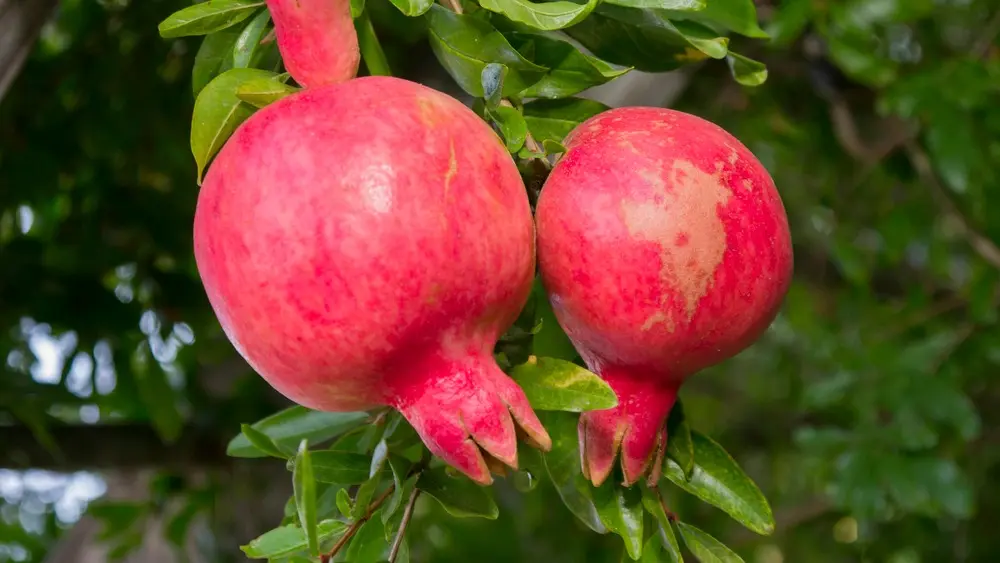
Popular options include the Wonderful Pomegranate Tree, known for its large, dark-red fruit and sweet-tart flavor, and the Utah Sweet Pomegranate Tree, which produces sweet fruit with notably softer seeds.
Find a Sunny Planting Location
Choose a location that receives full sun. Pomegranates produce their best growth and fruit crops when planted in a hot, sunny setting. They can tolerate several soil types, but good drainage is essential.
Avoid low spots where water collects after rain, as consistently wet roots can create problems.
How to Plant a Pomegranate Tree
Dig a planting hole wide enough to comfortably spread the roots without bending or crowding them. Position the tree at approximately the same depth it was growing previously, backfill with native soil, and water thoroughly to settle the soil around the roots.
Adding mulch around the root zone can help conserve moisture and reduce weed competition. Keep mulch several inches away from the trunk.
Watering Your New Tree
Young pomegranate trees need consistent moisture as their root systems become established. Many varieties benefit from approximately 1–2 inches of water per week when young. Mature trees are more drought tolerant but still benefit from occasional deep watering, especially during extended dry periods.
Pruning and Maintaining Pomegranate Trees
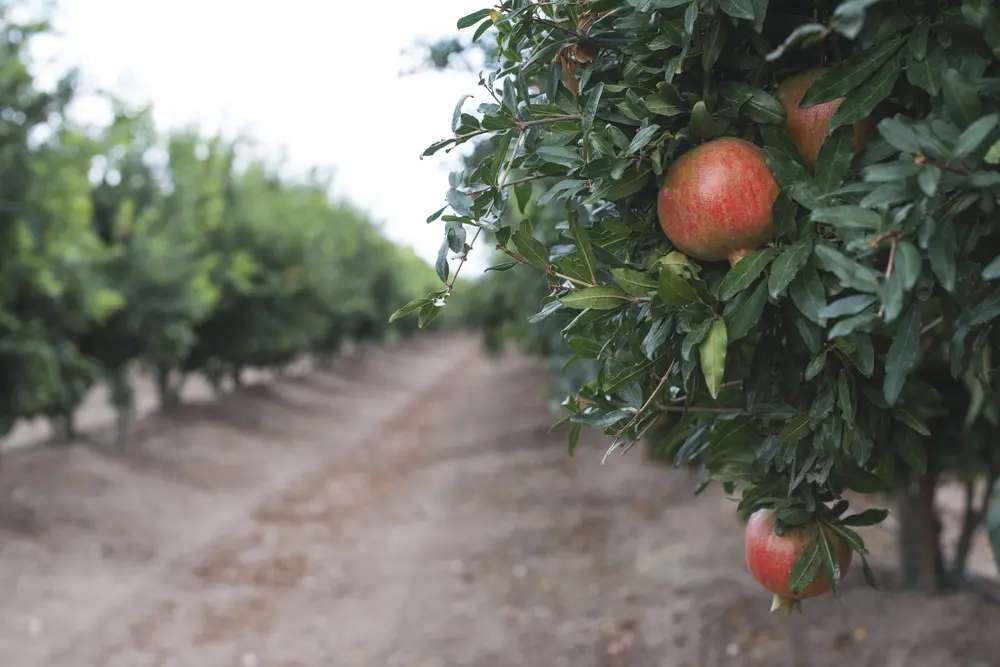
Pomegranates naturally grow as rounded shrubs or small multi-stemmed trees. Depending on the variety and pruning style, plants can eventually reach roughly 12–15 feet or considerably taller.
Prune during dormancy to remove dead, damaged, or crossing branches. You can also remove unwanted suckers and thin crowded growth to improve airflow and maintain the desired shape.
When Do Pomegranate Trees Produce Fruit?
You may not have to wait long for your first harvest. Varieties including Wonderful, Parfianka, and Utah Sweet can begin bearing fruit approximately one to three years after planting under suitable conditions.
Pomegranates are also self-fertile, so a single tree can produce fruit, although pollinating insects may help increase fruit set.
Grow Your Own Pomegranates at Home
With full sun, well-drained soil, proper watering, and occasional pruning, pomegranate trees can become productive additions to the home orchard for years to come. Their combination of ornamental flowers and flavorful fruit makes them especially rewarding for gardeners in warm growing regions.