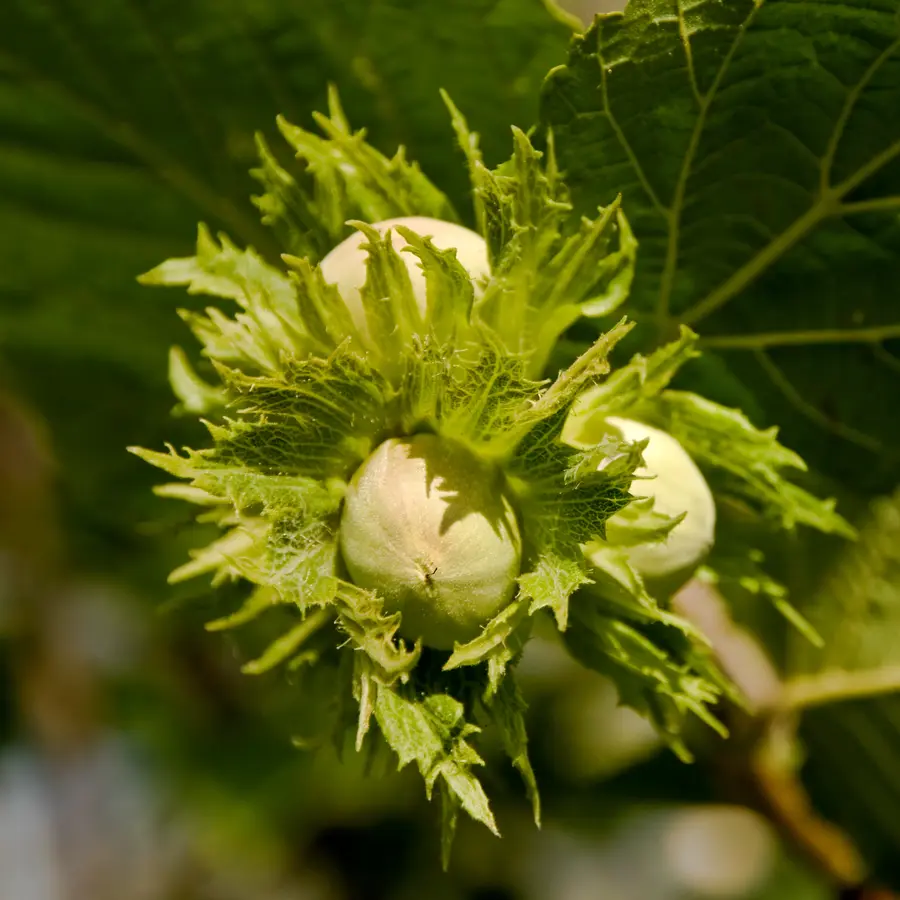
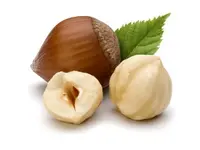
Grand Traverse® Hazelnut Tree
+/-4' Tall
$59.95
Ships: 12/15/2026 - 04/01/2027
Description
This product cannot be shipped to Oregon.
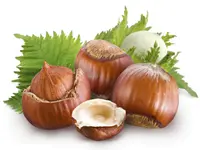
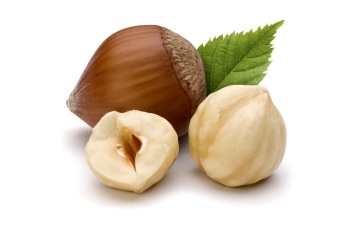
Grand Traverse Hazelnut trees were released by Cecil Farris in 1989 for growing in the northeastern USA. It is unique due to it's 25% Turkish genetics. The nuts are thin-shelled with very flavorful kernels. Grand Traverse is considered an excellent pollinator for other hazelnut varieties and can be pollinated by American filberts. Requires 800-1000 chill hours and grows in USDA zones 5-8.
Characteristics
| Bloom Color | Male: Greenish-Yellow; Female: Bright Red |
| Bloom Time | Late Winter - Early Spring |
| Fruit Color | Light Brown |
| Fruit Size | 0.5 inch diameter |
| Hardiness Zone Range | 5 - 8 |
| Pollination | Requires Pollinator |
| Ripens/Harvest | October |
| Shade/Sun | Full Sun; Tolerates Partial Shade |
| Soil Composition | Loam |
| Soil Moisture | Moist but Well Draining |
| Soil pH Level | 6.0-7.0 |
| Taste | Rich & Buttery |
| Texture | Smooth |
| Years to Bear | 3-8 |
Pricing
| Size | Price | Ships |
|---|---|---|
|
+/-4' Tall
|
$59.95 | 12/15/2026 - 04/01/2027 |
Zones
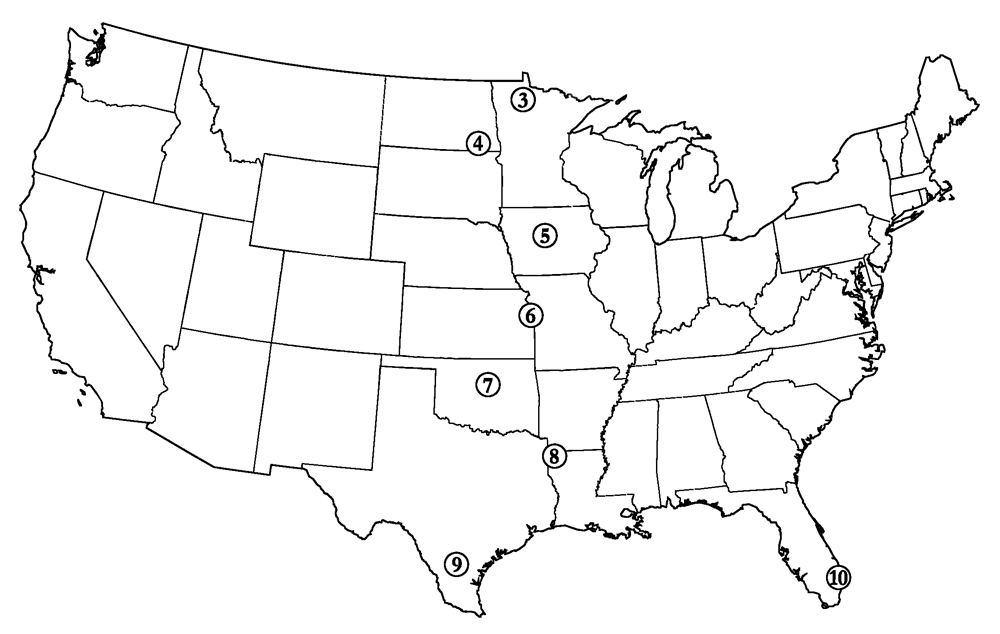
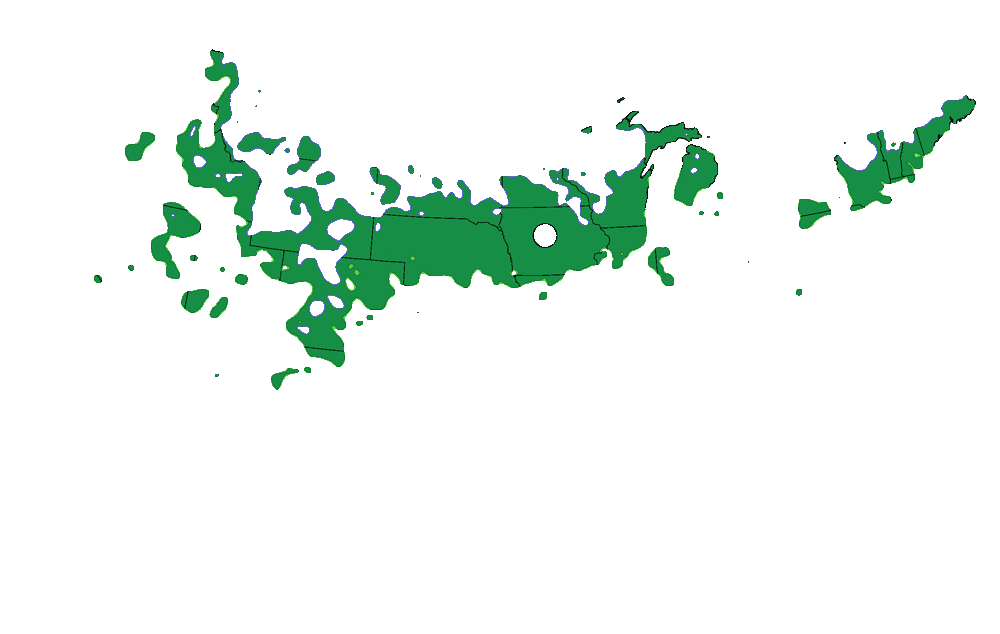
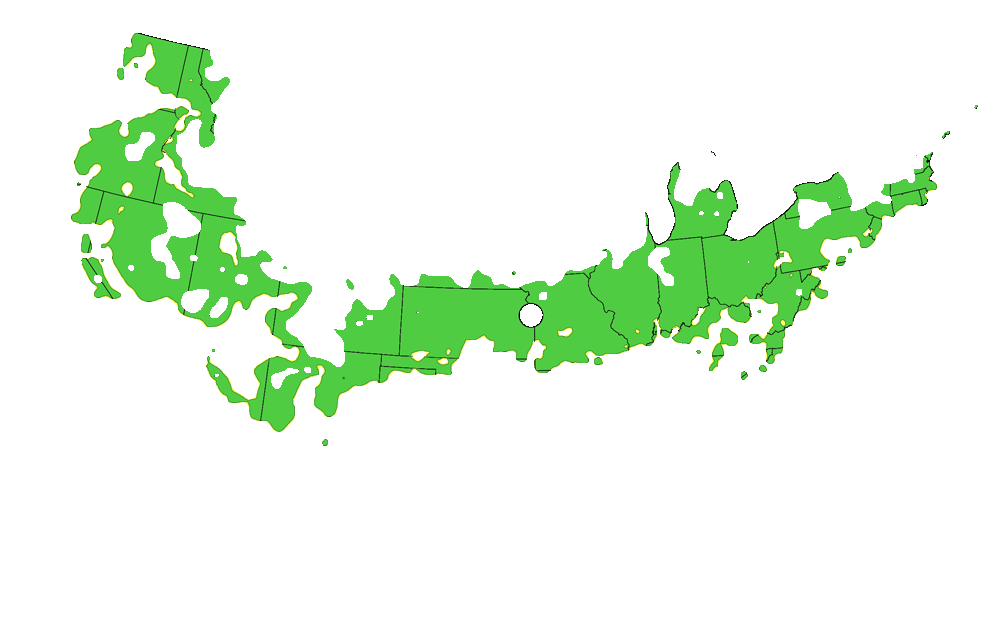
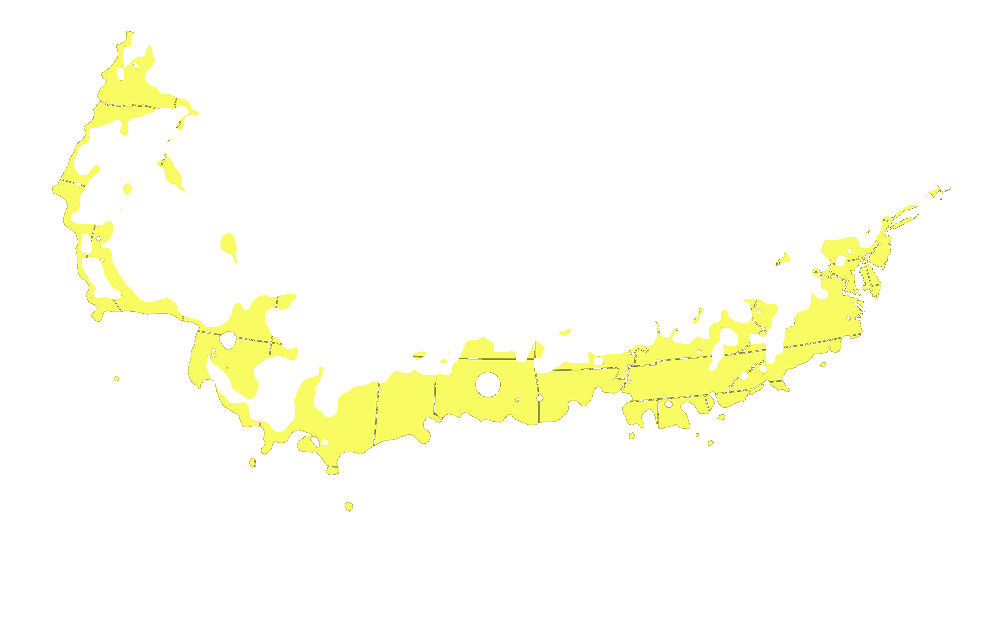
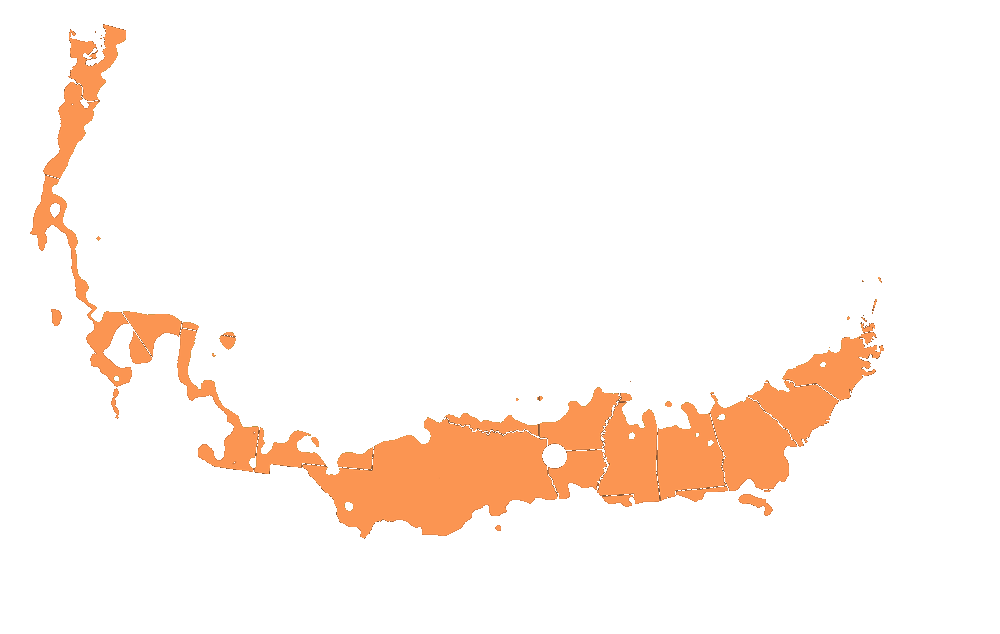
Shaded areas show where this product grows.
USDA Hardiness Zones
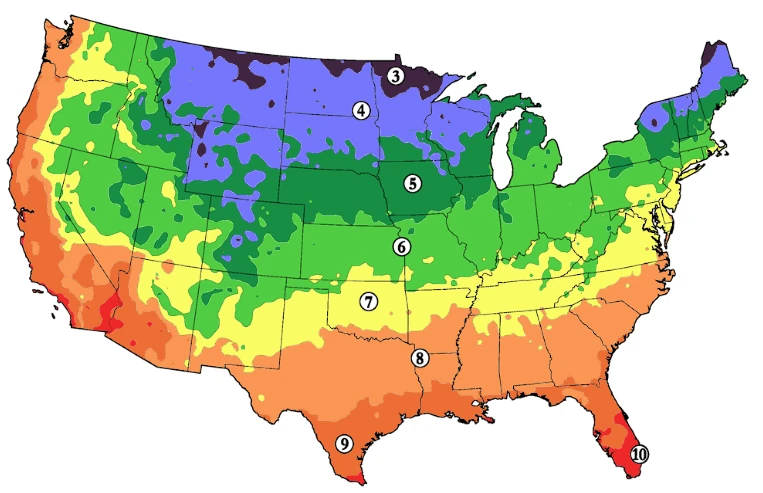
A hardiness zone is a geographic area defined by average annual minimum winter temperatures, helping gardeners determine which plants can survive in their region. Developed by the USDA, the 13 numerical zones indicate cold hardiness—for example, a plant "hardy to zone 10" tolerates minimum temperatures of 30 to 40 °F (−1.1 to 4.4 °C).
Grows in zones: 5 - 8
A hardiness zone is a geographic area defined by average annual minimum winter temperatures, helping gardeners determine which plants can survive in their region. Developed by the USDA, the 13 numerical zones indicate cold hardiness—for example, a plant "hardy to zone 10" tolerates minimum temperatures of 30 to 40 °F (−1.1 to 4.4 °C).