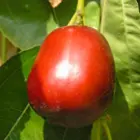
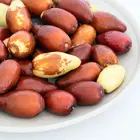
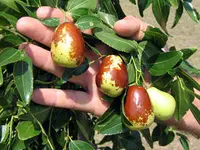
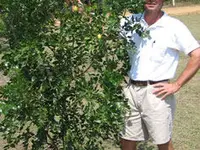
The Jujube originated in China, where it has been cultivated for over 4,000 years. Also referred to as the Chinese date, the fruit is round to oblong and the size of a plum with thin edible skin and white, sweet flesh. The immature Jujube fruit is green, but turns yellowish with mahogany colored spots as it ripens. At full maturity, it is completely red. The ripe Jujube looks like a date, but tastes like a sugary sweet apple. Most people like to eat the fruit at the stage when it is yellowish-green with red spots, because then it has a crisp texture. Tests have shown the Jujube to be very high in vitamin C. The Jujube fruit trees are 20 to 40 feet tall, with branches that naturally droop to give it a graceful appearance. There are hundreds of jujube cultivars in Asia, however Willis Orchard Company offers the two most popular Jujube trees for sale. Buy more fruit trees online to add to your home orchard.
Enter your 5-digit ZIP code to find your Plant Hardiness Zone.
or
Already know your zone? Choose it here:
What is a Hardiness Zone?
A hardiness zone is a geographic area defined by average annual minimum winter temperatures, helping gardeners determine which plants can survive in their region. Developed by the USDA, the 13 numerical zones indicate cold hardiness—for example, a plant "hardy to zone 10" tolerates minimum temperatures of 30 to 40 °F (−1.1 to 4.4 °C).