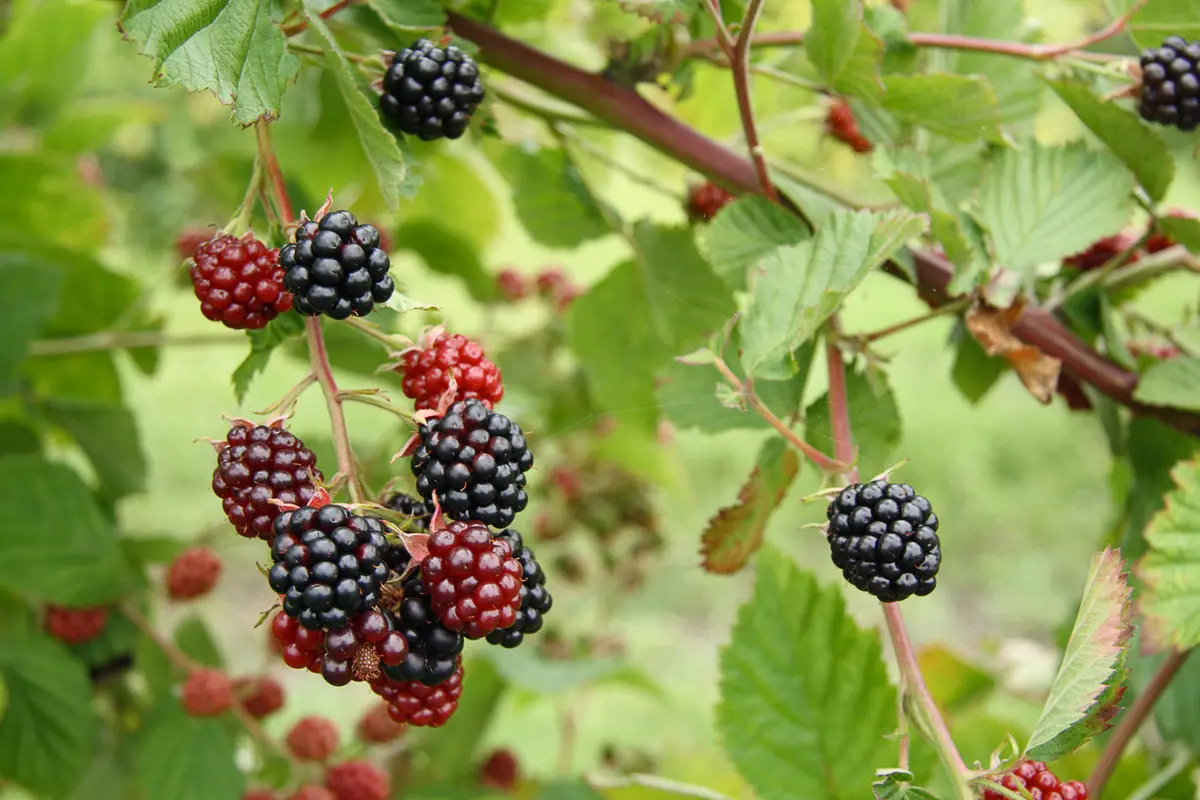
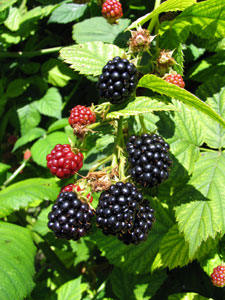
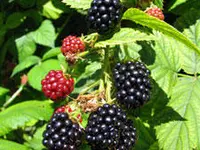
Cherokee Blackberry Plant
1 Year Old
$5.95
Ships: 12/01/2026 - 04/15/2027
Description
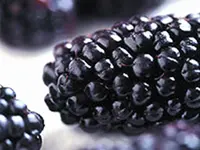
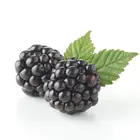
The Cherokee Blackberry Plant is an upright, vigorous fruiting plant that produces large, firm, and tart-sweet berries. The perfectly balanced flavor makes it excellent for fresh eating or for cooking. The Cherokee Blackberry cultivar was originally developed in Arkansas and is prized for its high yields, disease resistance, and ability to thrive in southern climates. The berry will ripen in mid-season around late June to early July and is excellent for fresh eating, baking (such as pies and cobblers), or for making jams, jellies, and preserves. Best grow Zones 5b - 9
Characteristics
| Bloom Color | White |
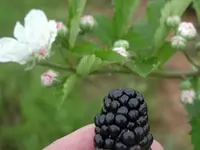
| Bloom Time | April / May |
| Fall Color | Vivid Red to Maroon |
| Fruit Color | Black |
| Fruit Size | Large |
| Hardiness Zone Range | 5 - 9 |
| Pollination | Self Fertile |
| Ripens/Harvest | Early June / Early July |
| Shade/Sun | Full Sun |
| Soil Composition | Rich humus sandy loam |
| Soil Moisture | Well-drained moist |
| Soil pH Level | 5.5 to 6.5 |
| Taste | Sweet |
| Texture | Firm |
| Years to Bear | 1-2 Years |
| Mature Width | 4 to 6 Feet |
| Mature Height | 4 to 6 Feet |
Zones
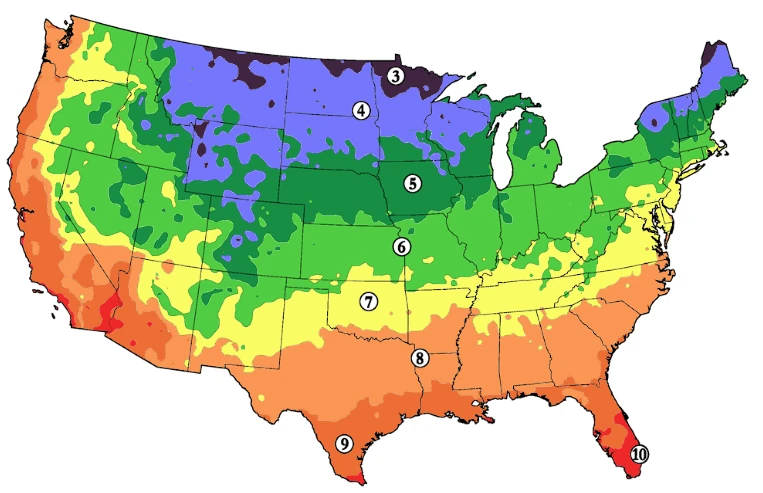
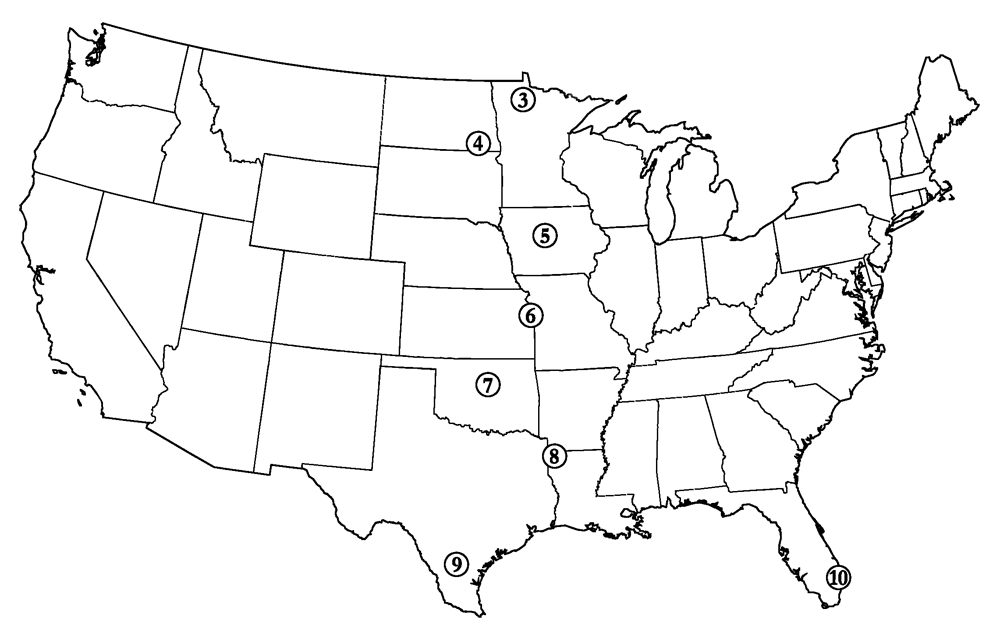
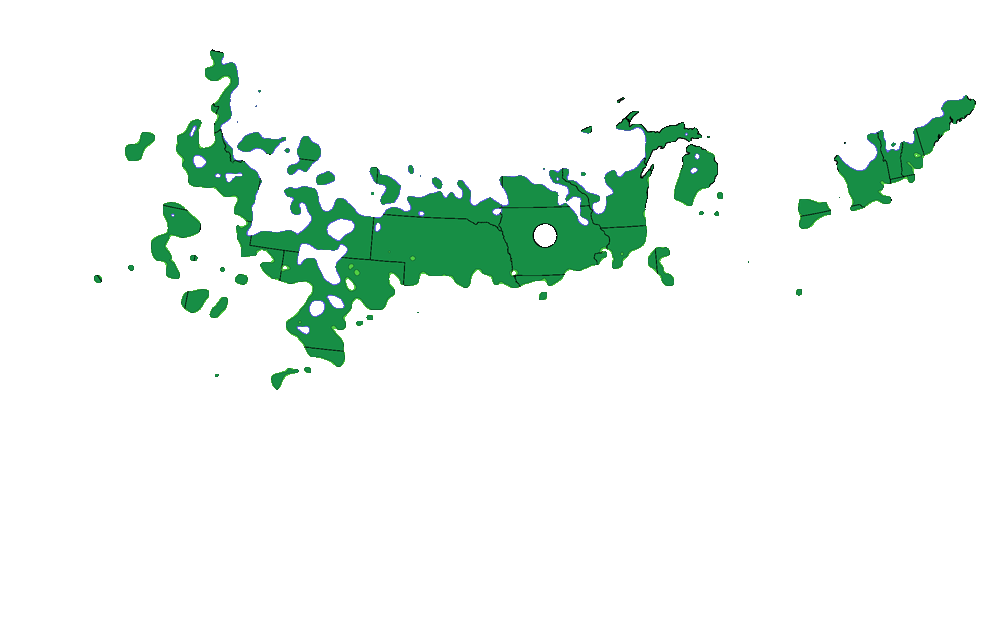
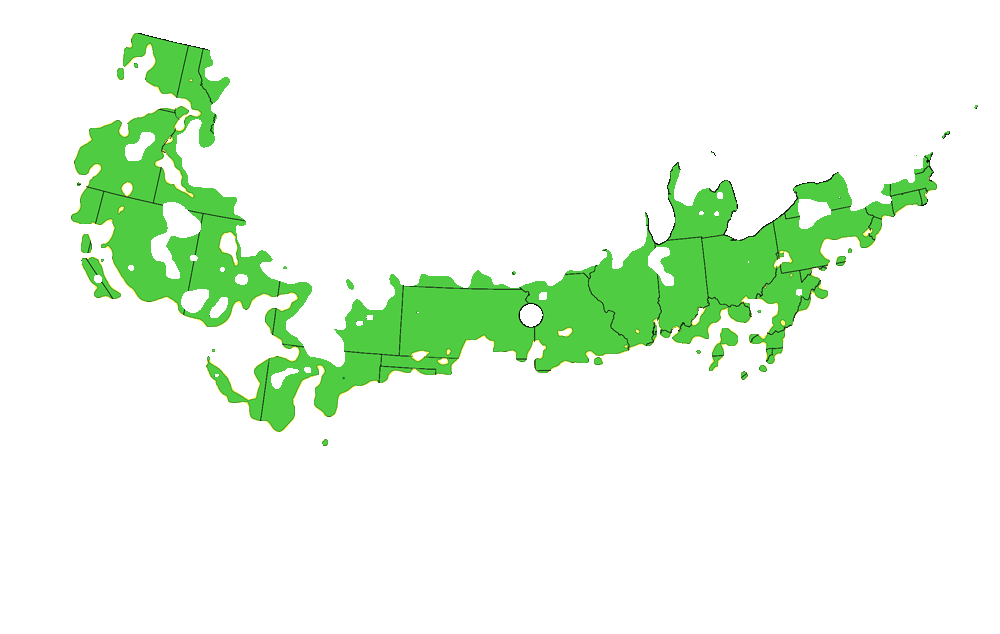
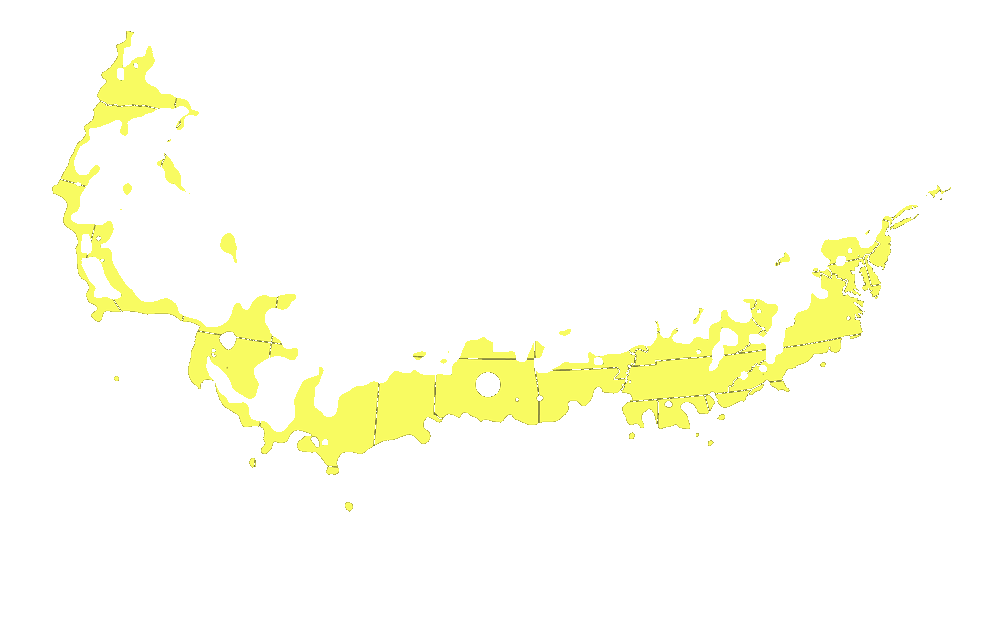
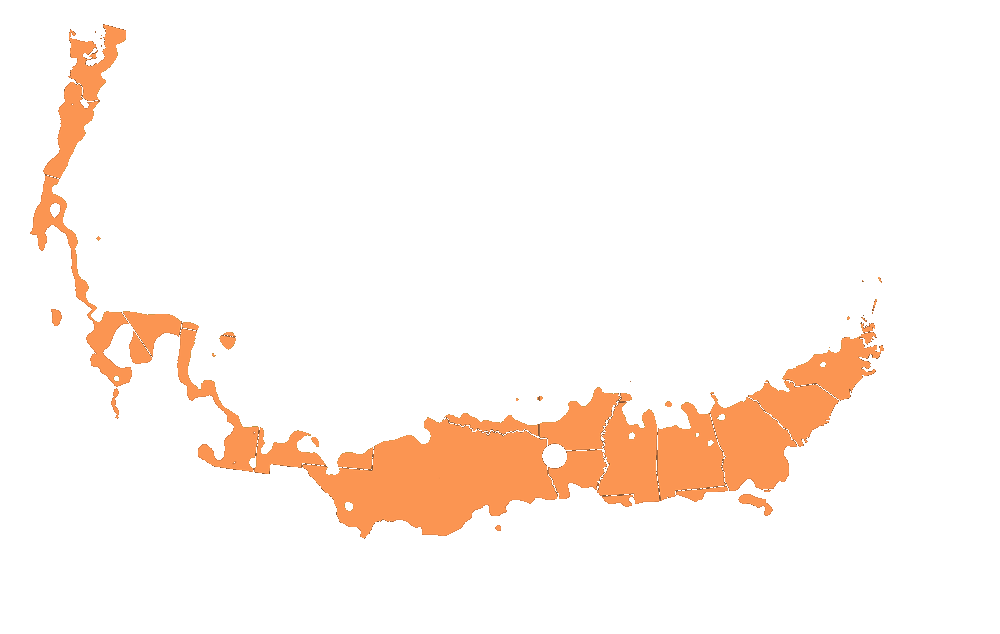
Shaded areas show where this product grows.
USDA Hardiness Zones
A hardiness zone is a geographic area defined by average annual minimum winter temperatures, helping gardeners determine which plants can survive in their region. Developed by the USDA, the 13 numerical zones indicate cold hardiness—for example, a plant "hardy to zone 10" tolerates minimum temperatures of 30 to 40 °F (−1.1 to 4.4 °C).
Grows in zones: 5 - 9
A hardiness zone is a geographic area defined by average annual minimum winter temperatures, helping gardeners determine which plants can survive in their region. Developed by the USDA, the 13 numerical zones indicate cold hardiness—for example, a plant "hardy to zone 10" tolerates minimum temperatures of 30 to 40 °F (−1.1 to 4.4 °C).

More Information
Are my blackberries ripe yet?? Look for a deep, dull black color. If the berry is still shiny or glossy black, it is not fully ripe and will taste tart. Plump and slightly soft to a gentle squeeze. If it feels hard, leave it on the vine. A fully ripe Cherokee blackberry will detach from the stem with a very gentle tug. If you have to pull hard, it is not ready.