Brazos Blackberry Plant
Rubus 'Brazos'
1 Year Old
$5.95
Ships: 12/01/2026 - 04/15/2027
Description
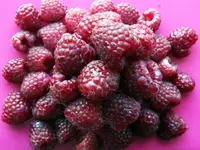
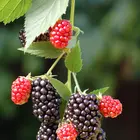
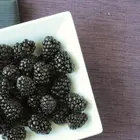
The Brazos Blackberry was developed by Texas A&M in 1959 and has become the primary cultivar grown in Texas and the Southern US. This highly heat-tolerant cultivar was designed specifically to thrive and produce heavy yields in hot Southern climates. It only requires 200 to 300 chill hours under 45°F. The thorny canes vigorously grow erect and upright forming a rigid bush. Because of the heavy fruit loads it benefits greatly from a trellis or support system. The Brazos Blackberry is a medium large, firm blackberry, with a tart flavor.
Characteristics
| Bloom Color | White |
| Bloom Time | Late March and April |
| Fall Color | Deep wine-red before leaf drop |
| Fruit Color | Black Glossy |
| Fruit Size | Medium Large |
| Hardiness Zone Range | 5 - 10 |
| Pollination | Self Fertile |
| Ripens/Harvest | Late May to July |
| Shade/Sun | Full Sun / Partial Shade |
| Soil Composition | Rich fertile, slightly acidic |
| Soil Moisture | Well-drained |
| Soil pH Level | 5.5 to 6.5 |
| Taste | Tart |
| Texture | Firm |
| Years to Bear | 1-2 Years |
| Mature Width | 3 to 5 Feet Wide |
| Mature Height | 4 to 6 Feet Tall |
Zones
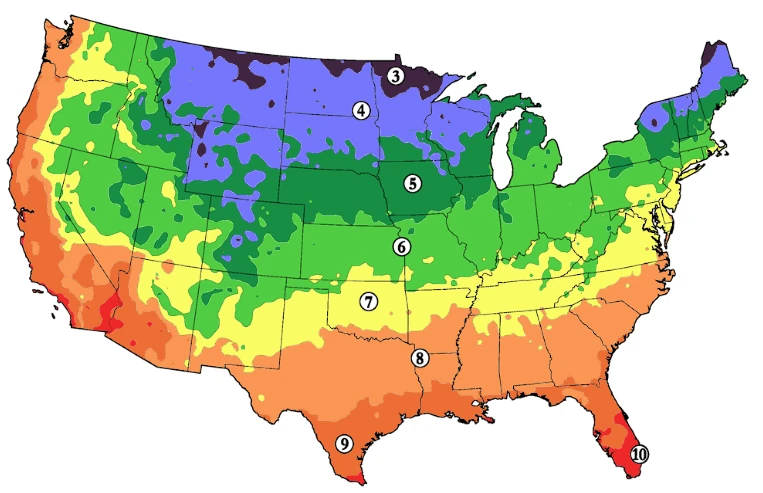
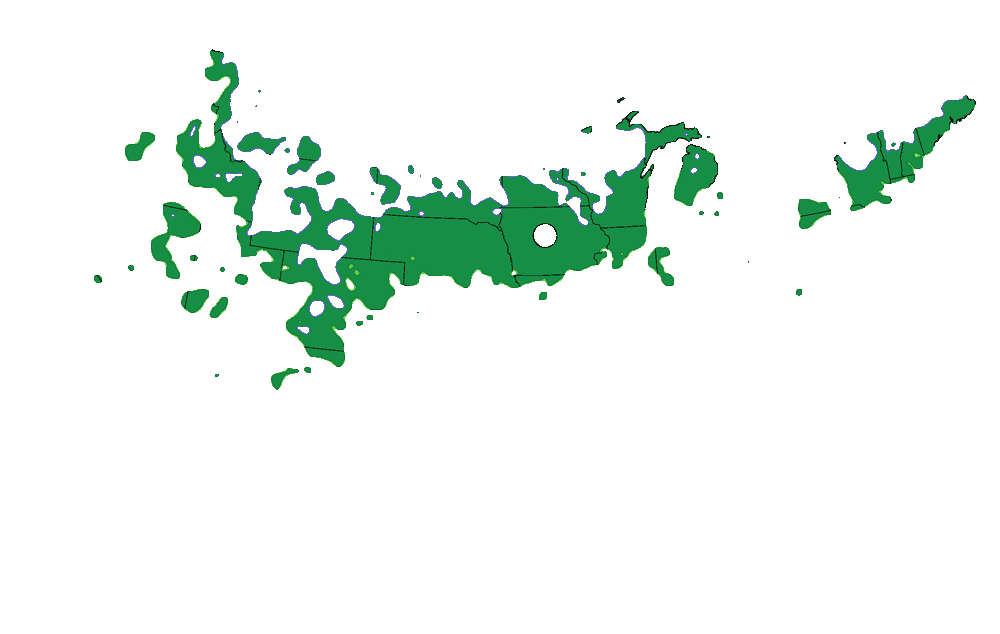
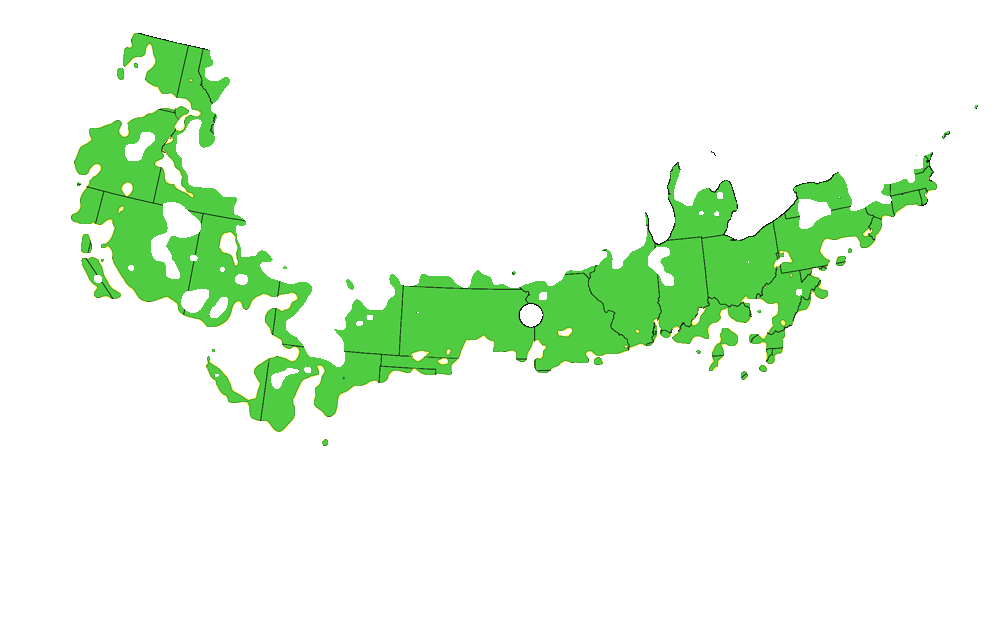
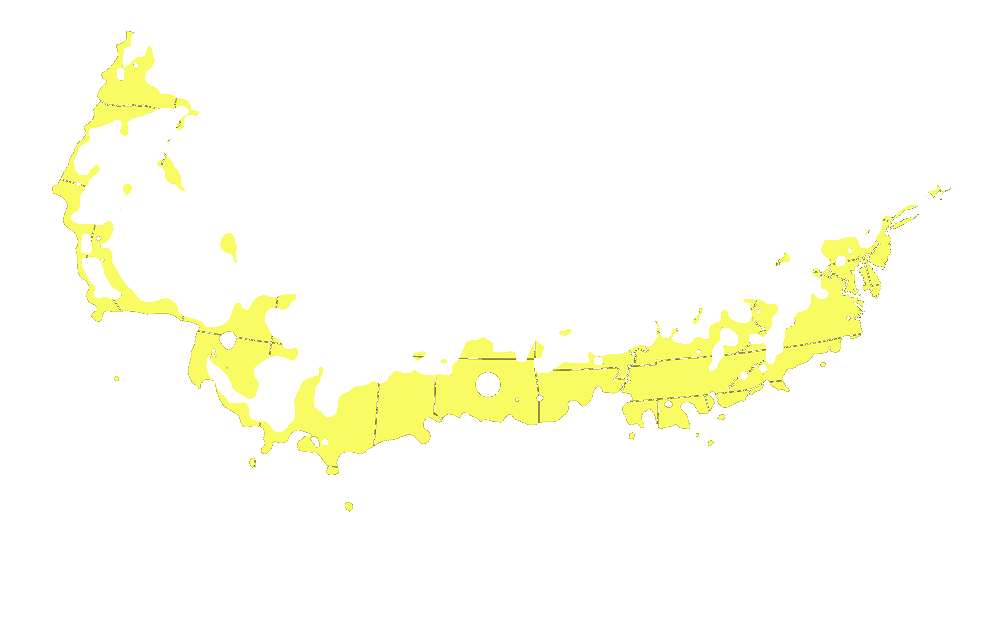
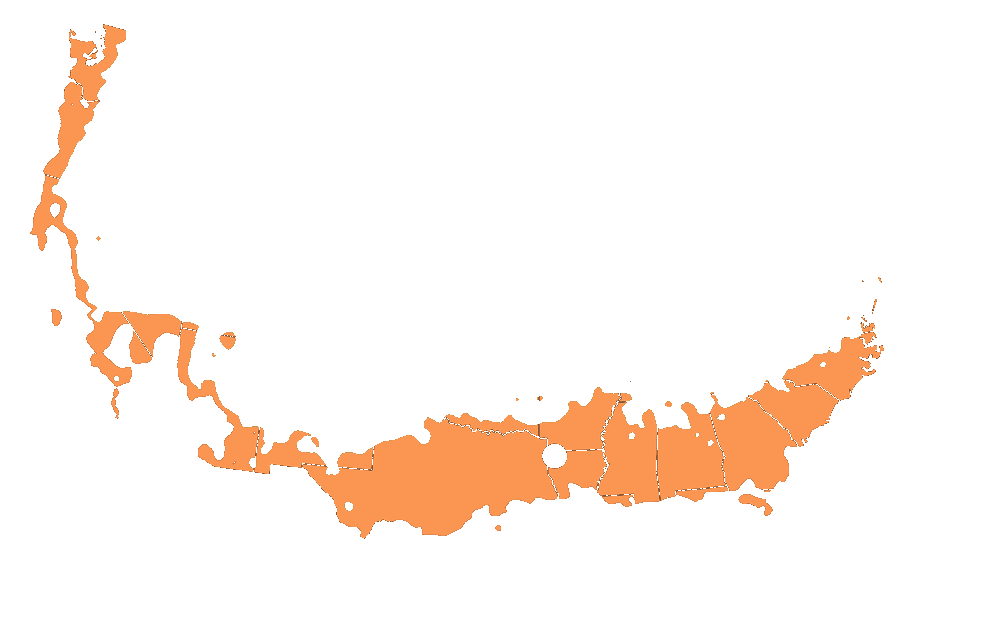
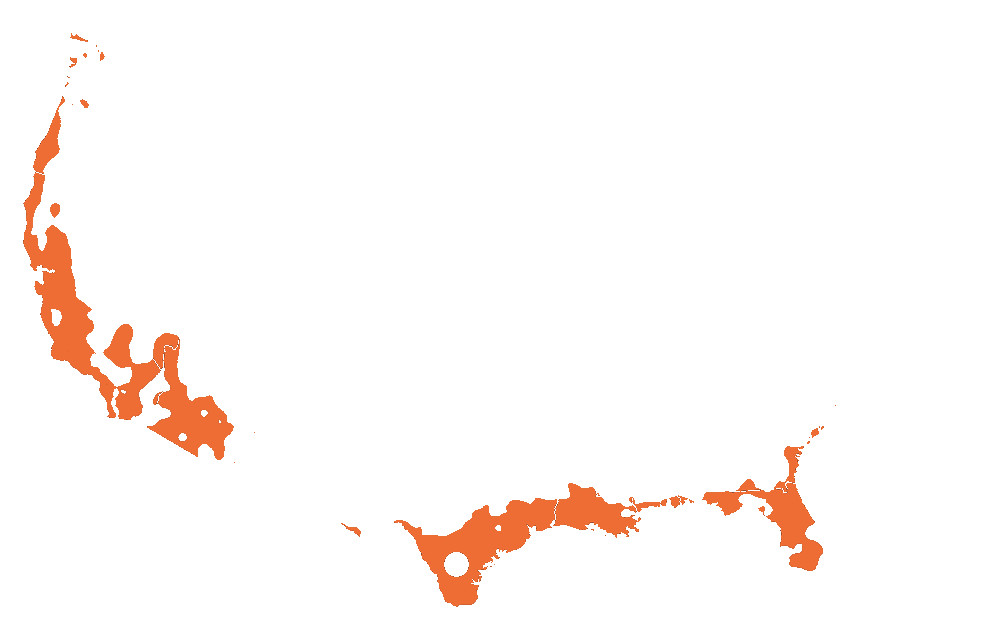
Shaded areas show where this product grows.
USDA Hardiness Zones
A hardiness zone is a geographic area defined by average annual minimum winter temperatures, helping gardeners determine which plants can survive in their region. Developed by the USDA, the 13 numerical zones indicate cold hardiness—for example, a plant "hardy to zone 10" tolerates minimum temperatures of 30 to 40 °F (−1.1 to 4.4 °C).
Grows in zones: 5 - 10
A hardiness zone is a geographic area defined by average annual minimum winter temperatures, helping gardeners determine which plants can survive in their region. Developed by the USDA, the 13 numerical zones indicate cold hardiness—for example, a plant "hardy to zone 10" tolerates minimum temperatures of 30 to 40 °F (−1.1 to 4.4 °C).

More Information
Fruit is produced on second-year canes (floricanes). New, green first-year canes (primocanes) should not be pruned down, as they are next year's fruit source. Dead floricanes should be pruned completely to the ground only after the summer harvest is finished. Do not prune the canes after September, as the buds are formed over the winter. Tip-prune the new canes when they are about 3-4 feet tall to encourage branching. Work the new side growth down the length of your trellis system.