Black Spanish Southern Grape Vine
Not currently available. Please call us at 1-866-586-6283 for availability information.
Description
This product cannot be shipped to Washington.
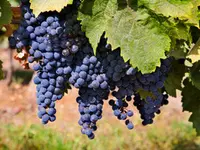
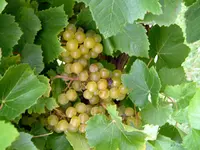
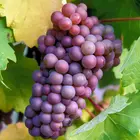
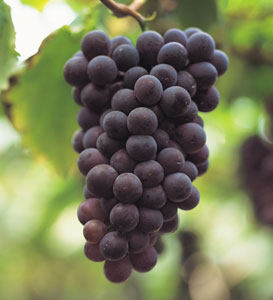
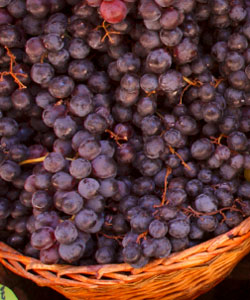
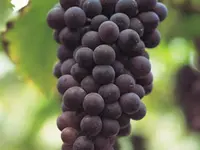
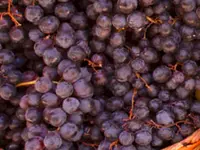
The Black Spanish is a juicy grape with blackish-blue skin that is good for juice, jelly or wine. The Black Spanish grape vine is a heavy and regular producer that is resistant to Pierce Disease and mildew. The Black Spanish grape is the "Best" variety for growing in the deep South due to its unparalleled disease resistance. The wine produced by the Black Spanish is similar to a Merlot or Cabernet wine. Ripens August to September and benefits from cane pruning.
Characteristics
| Bloom Color | Greenish-white |
| Bloom Time | Late Spring - Early Summer |
| Fruit Color | Black |
| Fruit Size | Small |
| Hardiness Zone Range | 6 - 10 |
| Pollination | Self-fertile |
| Ripens/Harvest | August-September |
| Shade/Sun | Full Sun |
| Soil Composition | Sandy, loamy, and well-draining |
| Soil Moisture | When Young; water weekly - Mature Plants; Occasional Deep Watering |
| Soil pH Level | 5.5-6.5 |
| Years to Bear | 3 years |
Zones
USDA Hardiness Zones
A hardiness zone is a geographic area defined as having a certain average annual minimum temperature, a factor relevant to the survival of many plants. In some systems other statistics are included in the calculations. The original and most widely used system, developed by the United States Department of Agriculture (USDA) as a rough guide for landscaping and gardening, defines 13 zones by long-term average annual extreme minimum temperatures. It has been adapted by and to other countries (such as Canada) in various forms. A plant may be described as "hardy to zone 10": this means that the plant can withstand a minimum temperature of −1.1 to 4.4 °C (30 to 40 °F).
Grows in zones: 6 - 10
A hardiness zone is a geographic area defined as having a certain average annual minimum temperature, a factor relevant to the survival of many plants. In some systems other statistics are included in the calculations. The original and most widely used system, developed by the United States Department of Agriculture (USDA) as a rough guide for landscaping and gardening, defines 13 zones by long-term average annual extreme minimum temperatures. It has been adapted by and to other countries (such as Canada) in various forms. A plant may be described as "hardy to zone 10": this means that the plant can withstand a minimum temperature of −1.1 to 4.4 °C (30 to 40 °F).