Eta Hazelnut Tree
Not currently available. Please call us at 1-866-586-6283 for availability information.
Description
This product cannot be shipped to Oregon.
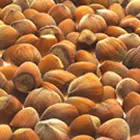
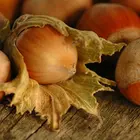
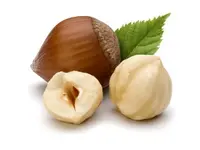
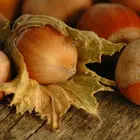
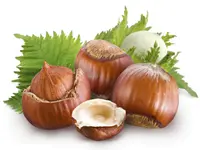
Eta Hazelnut Tree is a commercial hazelnut tree developed by Oregon State University. It was bred primarily as a pollinator to cover the late flowering periods of other varieties, such as Jefferson and Yamhill. This insures the maximum potential yield for each of the trees. Eta hazelnut produces good quality medium sized nuts of excellent flavor and is a consistent producer. The small (10-12') tree is immune to Eastern Filbert Blight. (Plant with Jefferson and/or Yamhill)
Characteristics
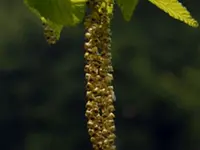
| Bloom Color | Male: Greenish-Yellow; Female: Bright Red |
| Bloom Time | Late Winter - Early Spring |
| Fruit Color | Light Brown |
| Fruit Size | 0.5 inch diameter |
| Hardiness Zone Range | 5 - 8 |
| Pollination | Requires Pollinator |
| Ripens/Harvest | August - October |
| Shade/Sun | Full Sun; Tolerates Partial Shade |
| Soil Composition | Loam |
| Soil Moisture | Moist but Well Draining |
| Soil pH Level | 6.0-7.0 |
| Taste | Rich & Buttery |
| Texture | Smooth |
| Years to Bear | 3-8 |
Zones
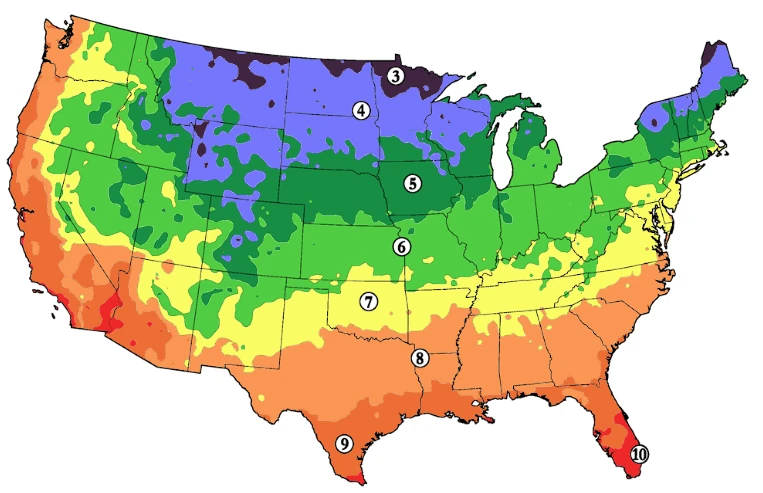
USDA Hardiness Zones
A hardiness zone is a geographic area defined as having a certain average annual minimum temperature, a factor relevant to the survival of many plants. In some systems other statistics are included in the calculations. The original and most widely used system, developed by the United States Department of Agriculture (USDA) as a rough guide for landscaping and gardening, defines 13 zones by long-term average annual extreme minimum temperatures. It has been adapted by and to other countries (such as Canada) in various forms. A plant may be described as "hardy to zone 10": this means that the plant can withstand a minimum temperature of −1.1 to 4.4 °C (30 to 40 °F).
Grows in zones: 5 - 8
A hardiness zone is a geographic area defined as having a certain average annual minimum temperature, a factor relevant to the survival of many plants. In some systems other statistics are included in the calculations. The original and most widely used system, developed by the United States Department of Agriculture (USDA) as a rough guide for landscaping and gardening, defines 13 zones by long-term average annual extreme minimum temperatures. It has been adapted by and to other countries (such as Canada) in various forms. A plant may be described as "hardy to zone 10": this means that the plant can withstand a minimum temperature of −1.1 to 4.4 °C (30 to 40 °F).