American Crabapple Tree
+/-1' (Seed-Grown)
$7.95
Ships: 12/01/2026 - 03/15/2027
This product is also part of these bundles:
Description
This product cannot be shipped to California.
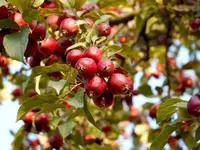
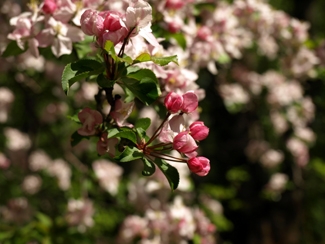
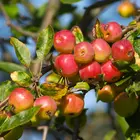
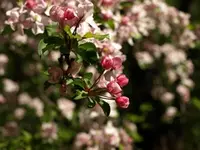
The American Crabapple is a small tree growing 10' to 30' in height at maturity. When planted close together, the trees will form small thickets which are excellent for wildlife. The American Crabapple Trees have extremely fragrant white or pink blossoms which appear early spring through May. After flowering a sweet-sour apple forms that is less than 2" in size making it a wonder snack for wildlife. Many crabapple trees will hold their small fruits all winter, providing food for white-tail deer and birds such as pheasants, mockingbirds, white-throated sparrow, northern flickers and finches. Squirrels also enjoy the crabapple and will provide cleanup duty for those that fall on the ground.
Characteristics
| Bloom Color | White |
| Bloom Time | Early Spring |
| Fruit Color | Red |
| Fruit Size | 0.75-1.75 inch diameter |
| Hardiness Zone Range | 5 - 9 |
| Pollination | Self Fertile |
| Ripens/Harvest | August - October |
| Shade/Sun | Full Sun |
| Soil Composition | Rich Loam |
| Soil Moisture | Well Draining |
| Soil pH Level | 5.5-6.5 |
| Taste | Sweet-Tart |
| Texture | Firm |
| Years to Bear | 2-5 |
Pricing
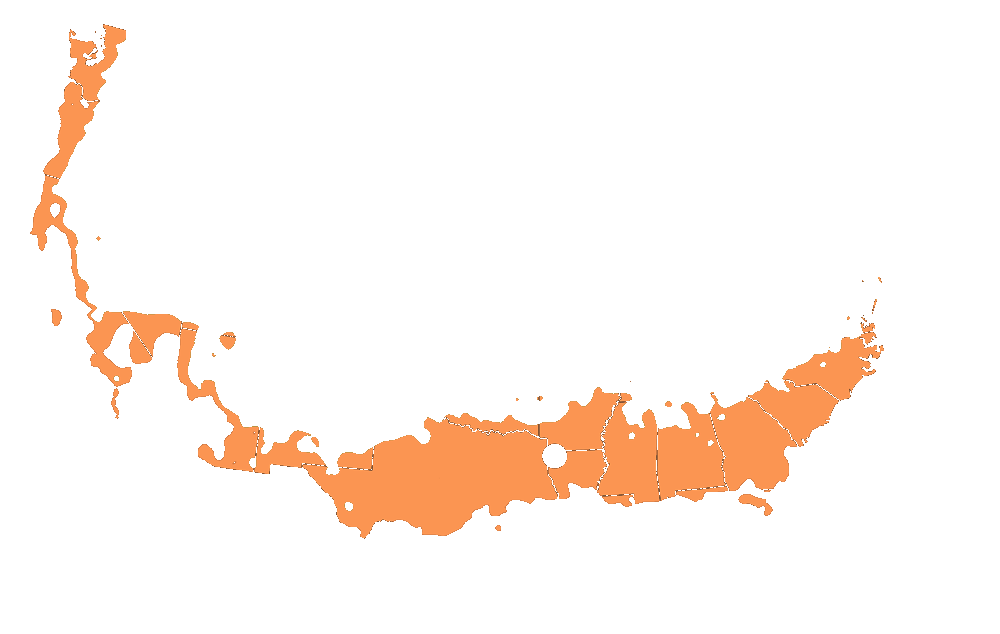
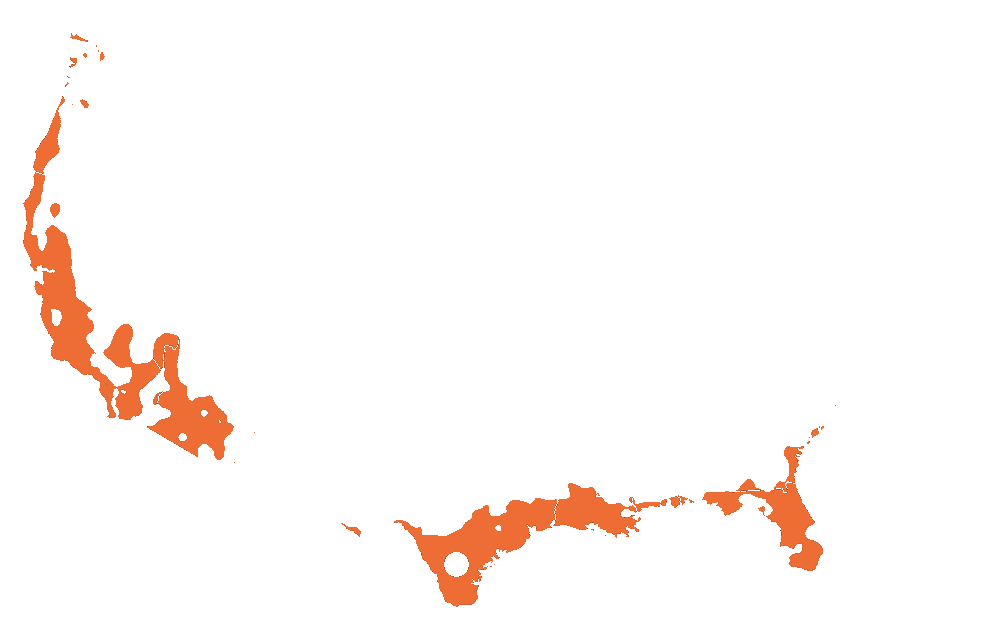
Zones
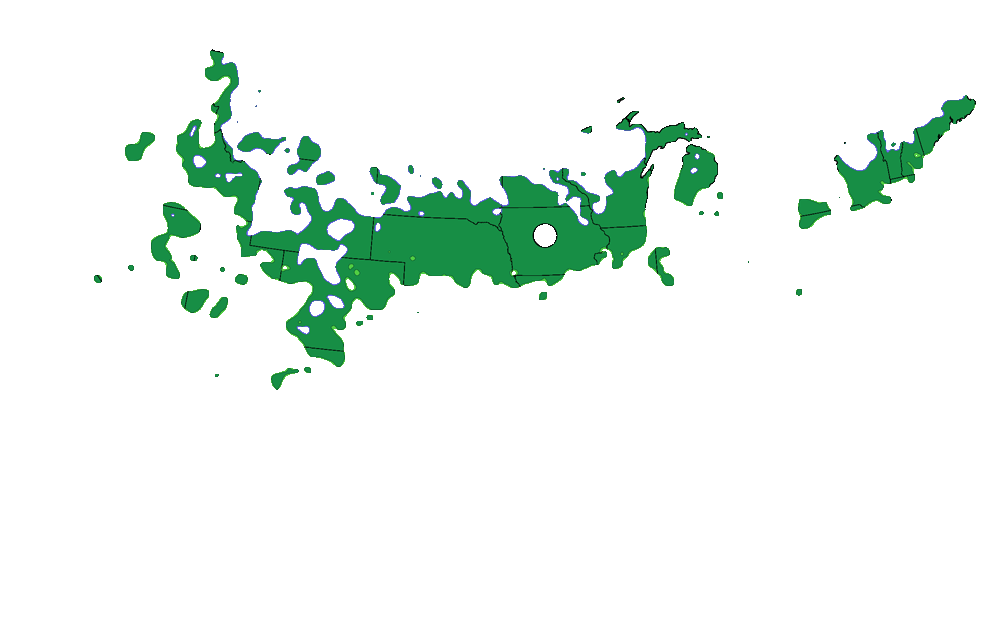
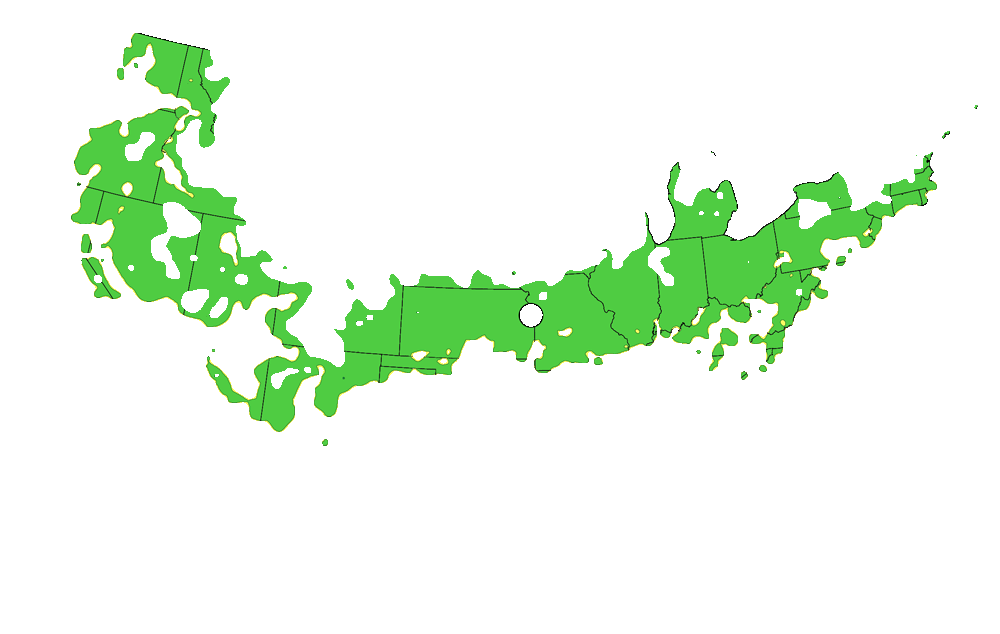
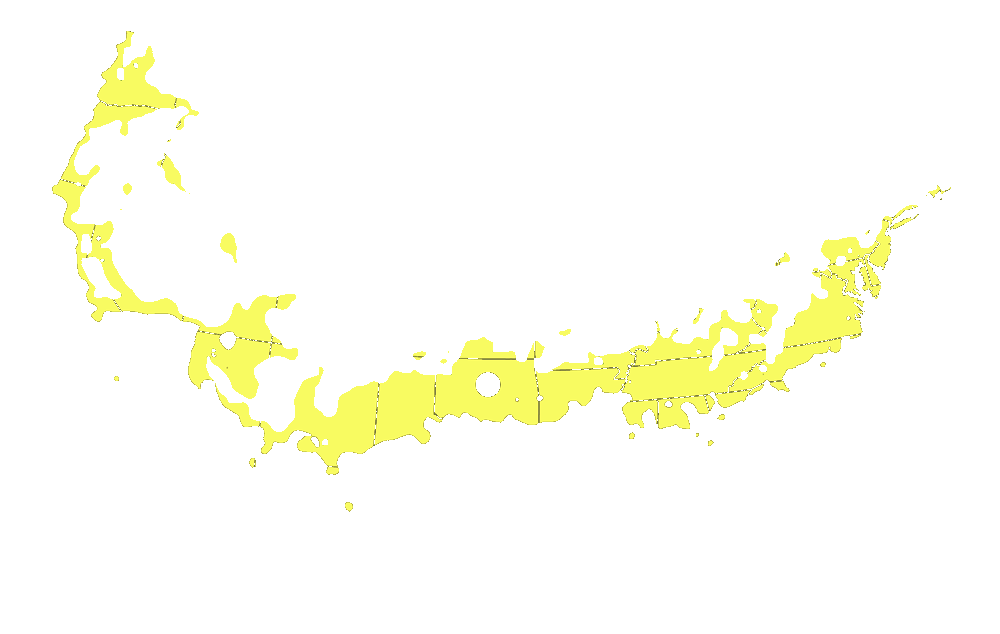
Shaded areas show where this product grows.
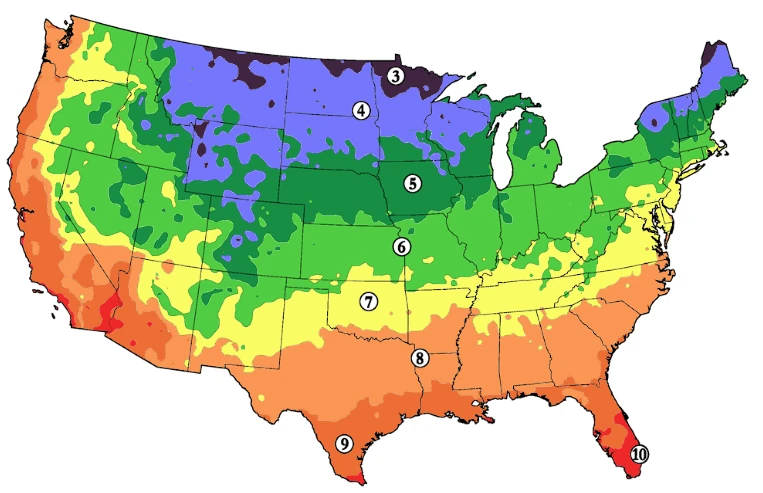
USDA Hardiness Zones
A hardiness zone is a geographic area defined by average annual minimum winter temperatures, helping gardeners determine which plants can survive in their region. Developed by the USDA, the 13 numerical zones indicate cold hardiness—for example, a plant "hardy to zone 10" tolerates minimum temperatures of 30 to 40 °F (−1.1 to 4.4 °C).
Grows in zones: 5 - 9
A hardiness zone is a geographic area defined by average annual minimum winter temperatures, helping gardeners determine which plants can survive in their region. Developed by the USDA, the 13 numerical zones indicate cold hardiness—for example, a plant "hardy to zone 10" tolerates minimum temperatures of 30 to 40 °F (−1.1 to 4.4 °C).