Colossal Chestnut Tree
+/-7' (3/4-1" caliper Grafted Hybrid)(Fruiting Size - Limited Supply)
$124.95
Ships: 01/15/2027 - 03/15/2027
Description
This product cannot be shipped to California.
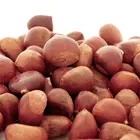
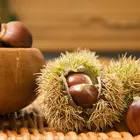
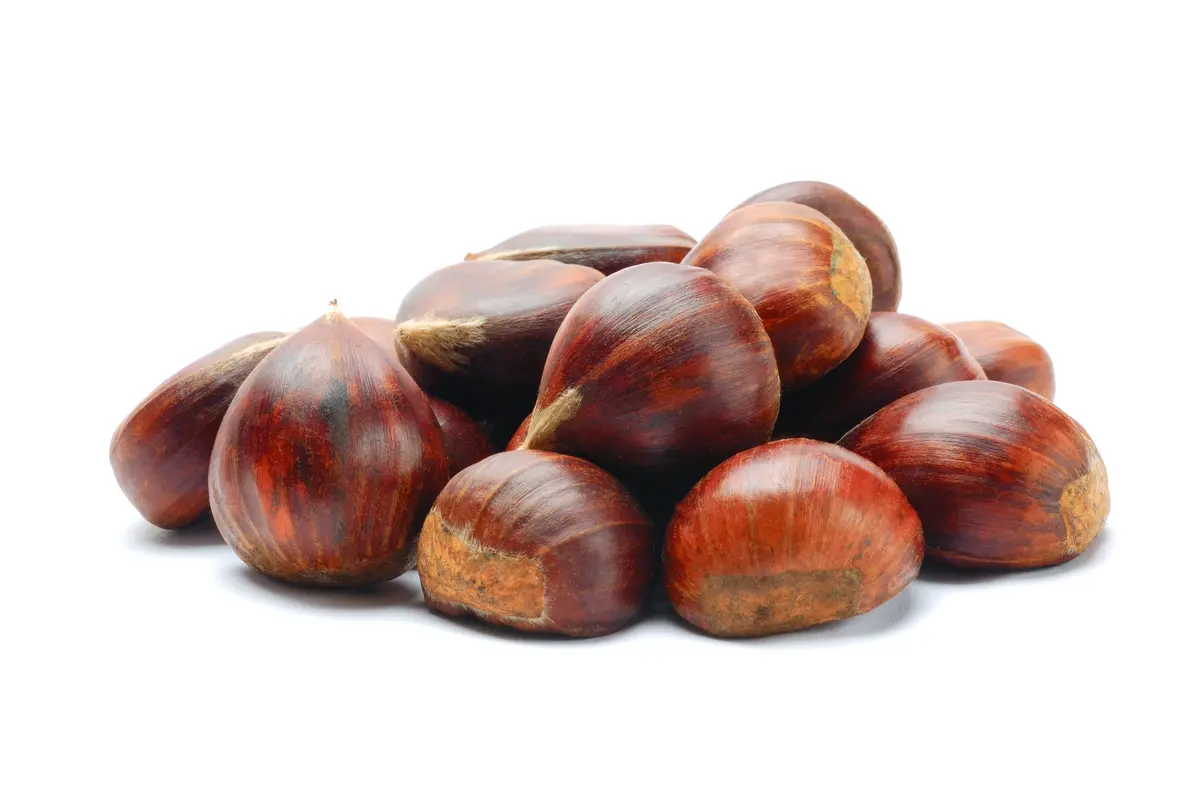
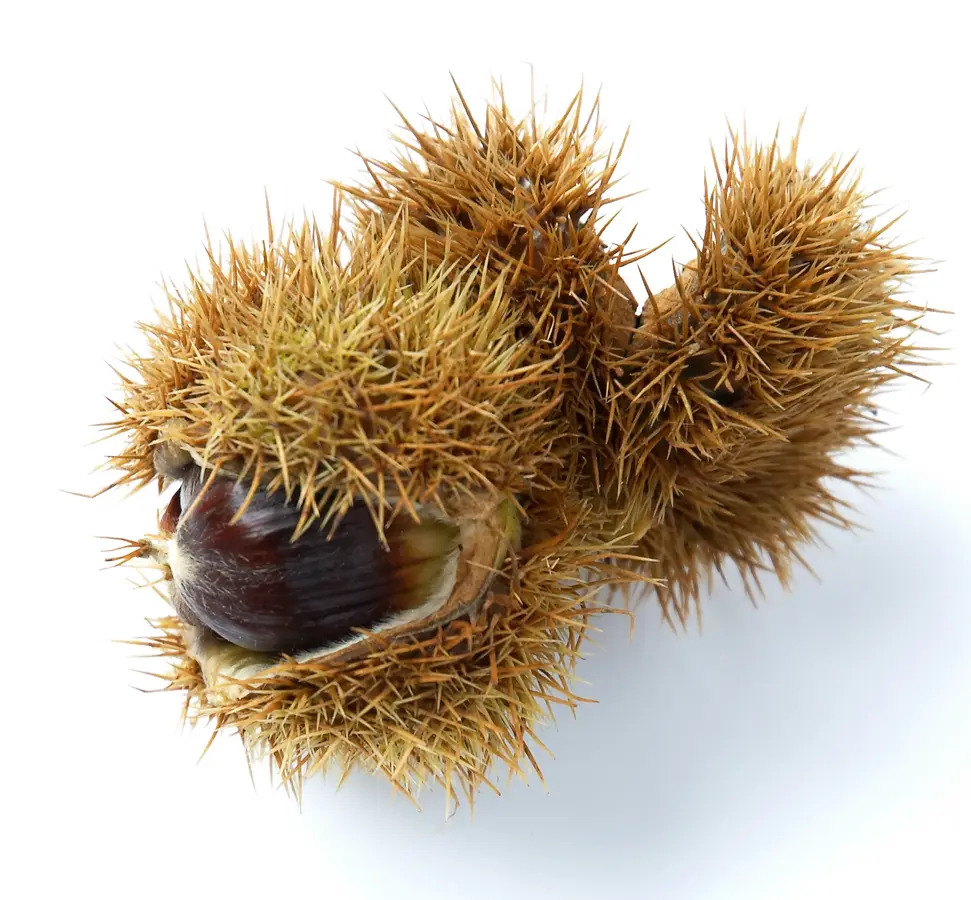
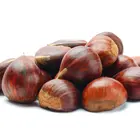
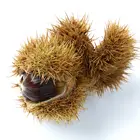
The Colossal Chestnut Tree features a large nut with 11 to 15 nuts per pound, that has an easy peel pellicle and a very good nut flavor. The Colossal Chestnut tree itself is large, and will spread out, similar to it's parent tree in Nevada City, California, which is 70 feet tall. It needs a pollinizer, such as the Nevada Chestnut. Colossal Chestnut is cold hardy, down to -20 degrees Fahrenheit, and the nuts are ready to harvest in early to mid September. Order top-quality hybrid chestnut trees from Willis Orchards!
Characteristics
| Bloom Color | Yellowish-Green |
| Bloom Time | Summer |
| Fruit Color | Brown |
| Fruit Size | 1.5-2 inch diameter |
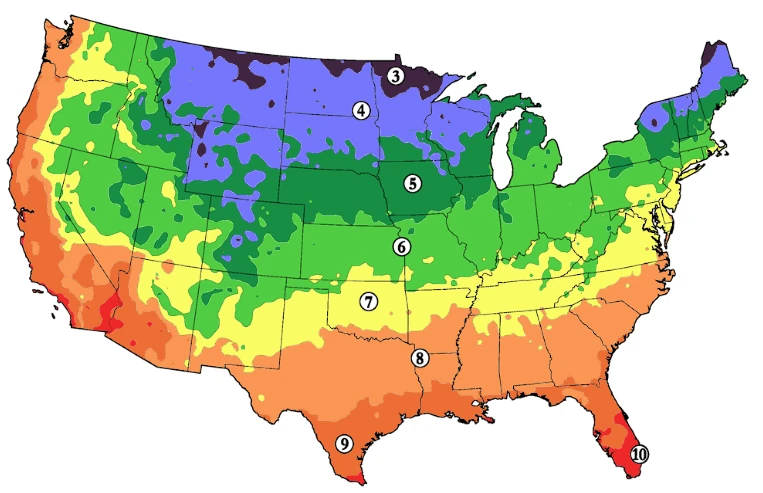
| Hardiness Zone Range | 5 - 9 |
| Pollination | Requires Pollinator |
| Ripens/Harvest | September - October |
| Shade/Sun | Full Sun; Tolerates Partial Shade |
| Soil Composition | Deep & Loamy |
| Soil Moisture | Well Draining |
| Soil pH Level | 4.5-6.5 |
| Taste | Sweet & Starchy |
| Texture | Smooth & Starchy |
| Years to Bear | 3-5 |
Zones
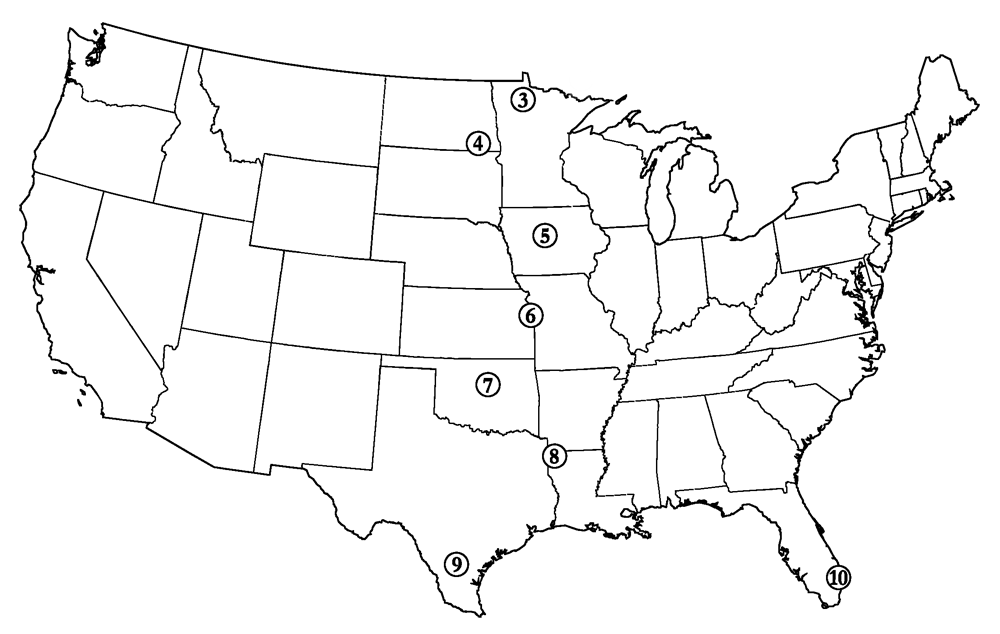
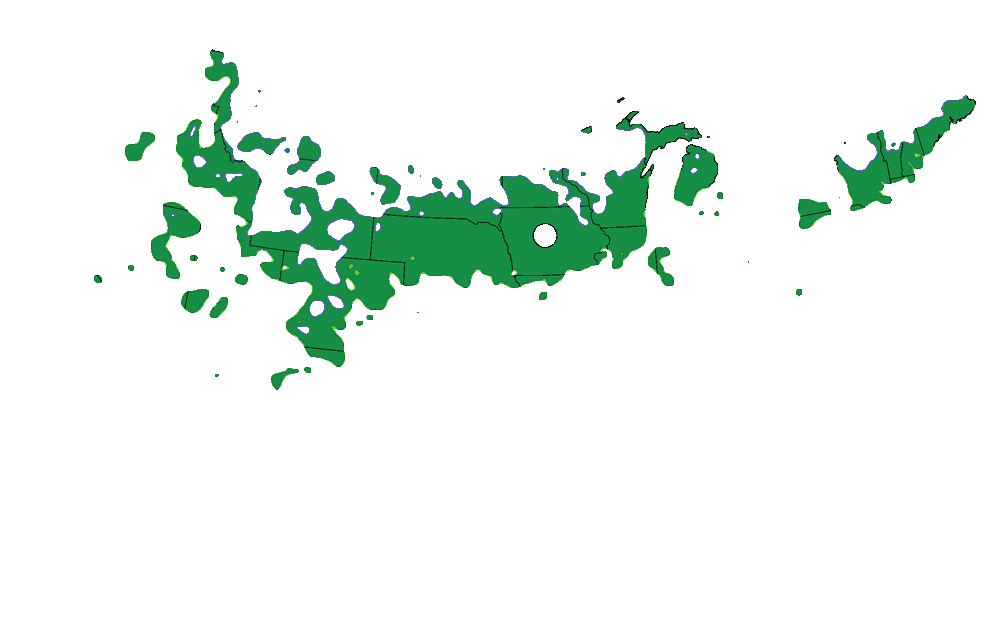
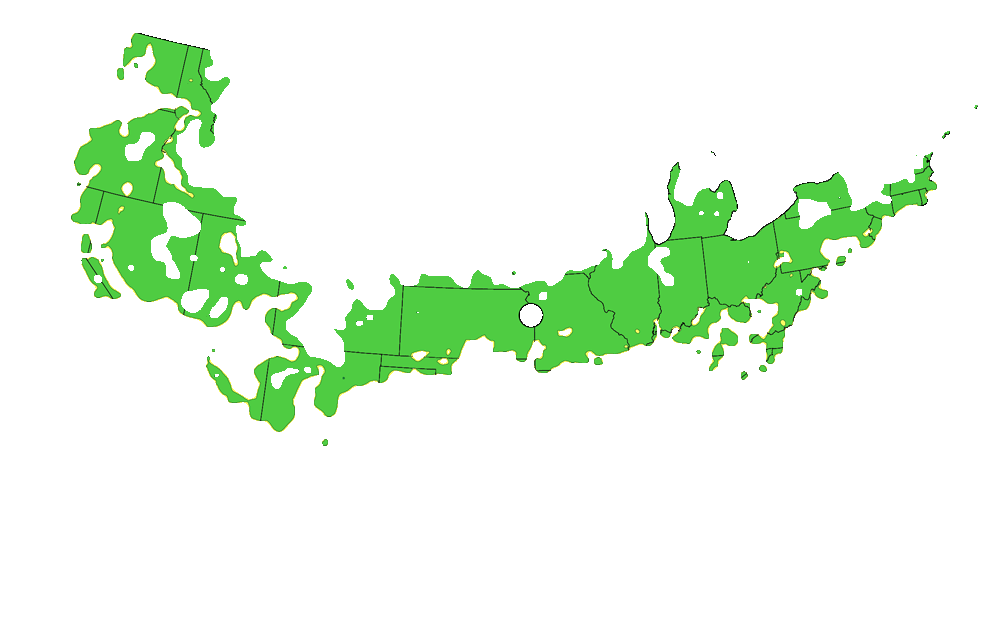
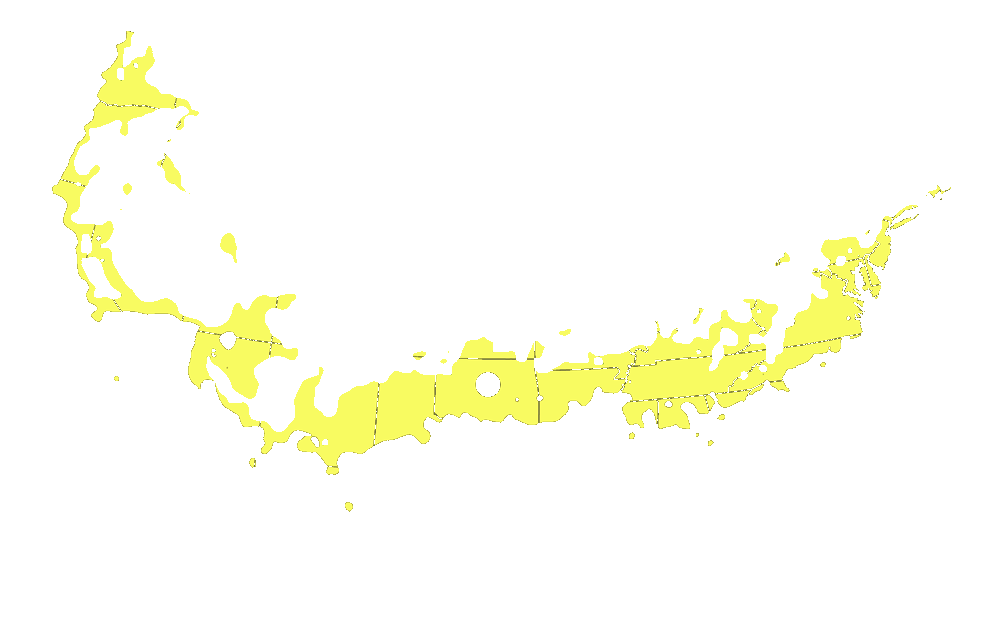
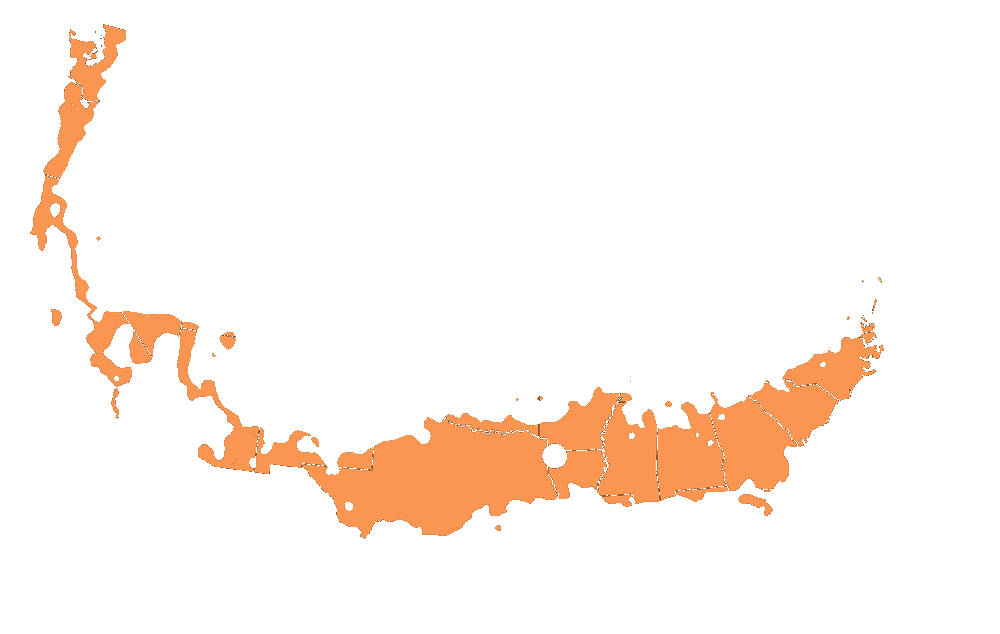
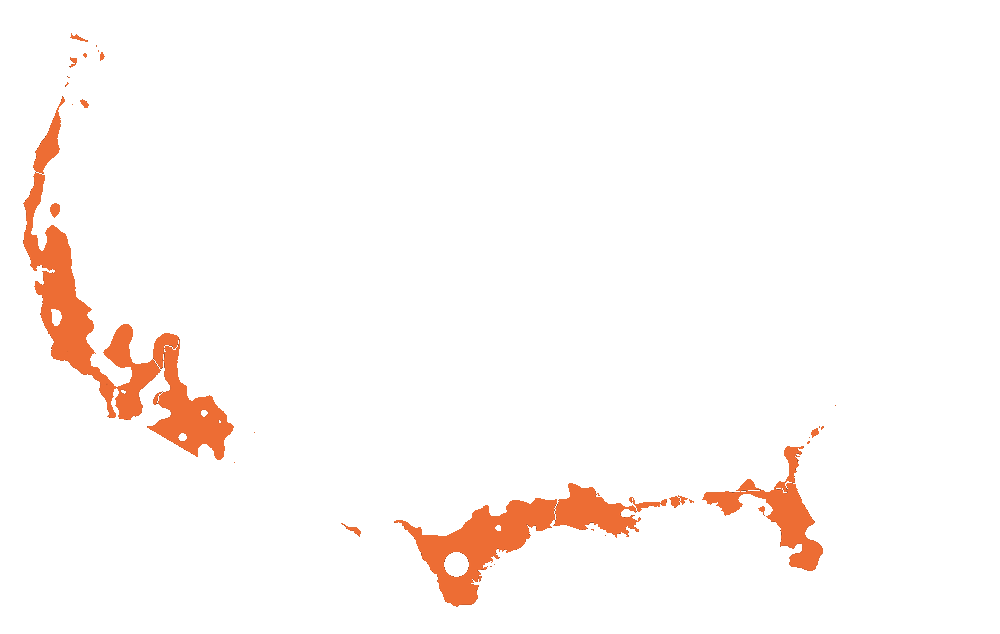
Shaded areas show where this product grows.
USDA Hardiness Zones
A hardiness zone is a geographic area defined by average annual minimum winter temperatures, helping gardeners determine which plants can survive in their region. Developed by the USDA, the 13 numerical zones indicate cold hardiness—for example, a plant "hardy to zone 10" tolerates minimum temperatures of 30 to 40 °F (−1.1 to 4.4 °C).
Grows in zones: 5 - 9
A hardiness zone is a geographic area defined by average annual minimum winter temperatures, helping gardeners determine which plants can survive in their region. Developed by the USDA, the 13 numerical zones indicate cold hardiness—for example, a plant "hardy to zone 10" tolerates minimum temperatures of 30 to 40 °F (−1.1 to 4.4 °C).