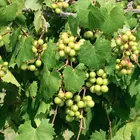
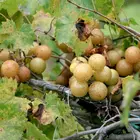
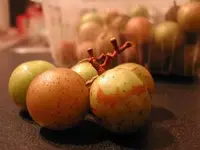
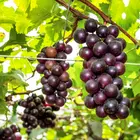
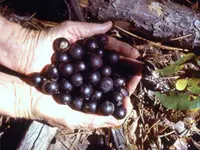
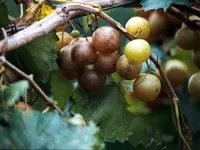
Muscadine and scuppernong grapes are native North American grapes indigenous to the lower half of the United States. These Southern grapes are much larger individual berries than bunch grapes, but grow in smaller pods or bunches and have a thicker skin. Researchers have discovered the seed of muscadines to have cancer preventing properties, so many commercial growers now make more money selling the seeds to pharmaceutical companies than they make on other juice or wine products.
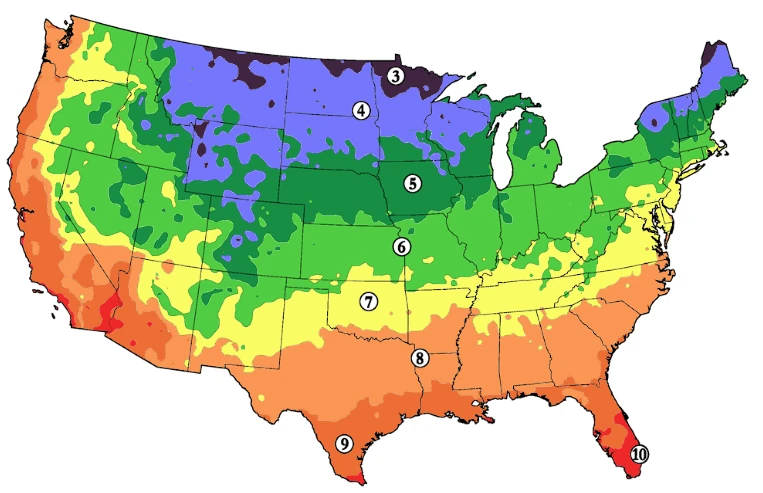
Male and female muscadines are purple or black while male and female scuppernongs are bronze or golden. However, a scuppernong is a muscadine. So, a golden colored muscadine is called a scuppernong. Muscadines are thought of as a traditional southern grape only, however, muscadines are zoned by the USDA for growing zones 6-10. Zone 6 includes a large area from Massachusetts to Kansas.
So whether you live in the deep south or the northern United States, muscadines are a delicious, healthy, and easy grape to grow in your home vineyard. Just remember to plant male and female muscadines and scuppernongs for proper pollination and to ensure huge crops of scrumptious grapes. Discover more grape vines for sale.
Enter your 5-digit ZIP code to find your Plant Hardiness Zone.
or
Already know your zone? Choose it here:
What is a Hardiness Zone?
A hardiness zone is a geographic area defined by average annual minimum winter temperatures, helping gardeners determine which plants can survive in their region. Developed by the USDA, the 13 numerical zones indicate cold hardiness—for example, a plant "hardy to zone 10" tolerates minimum temperatures of 30 to 40 °F (−1.1 to 4.4 °C).